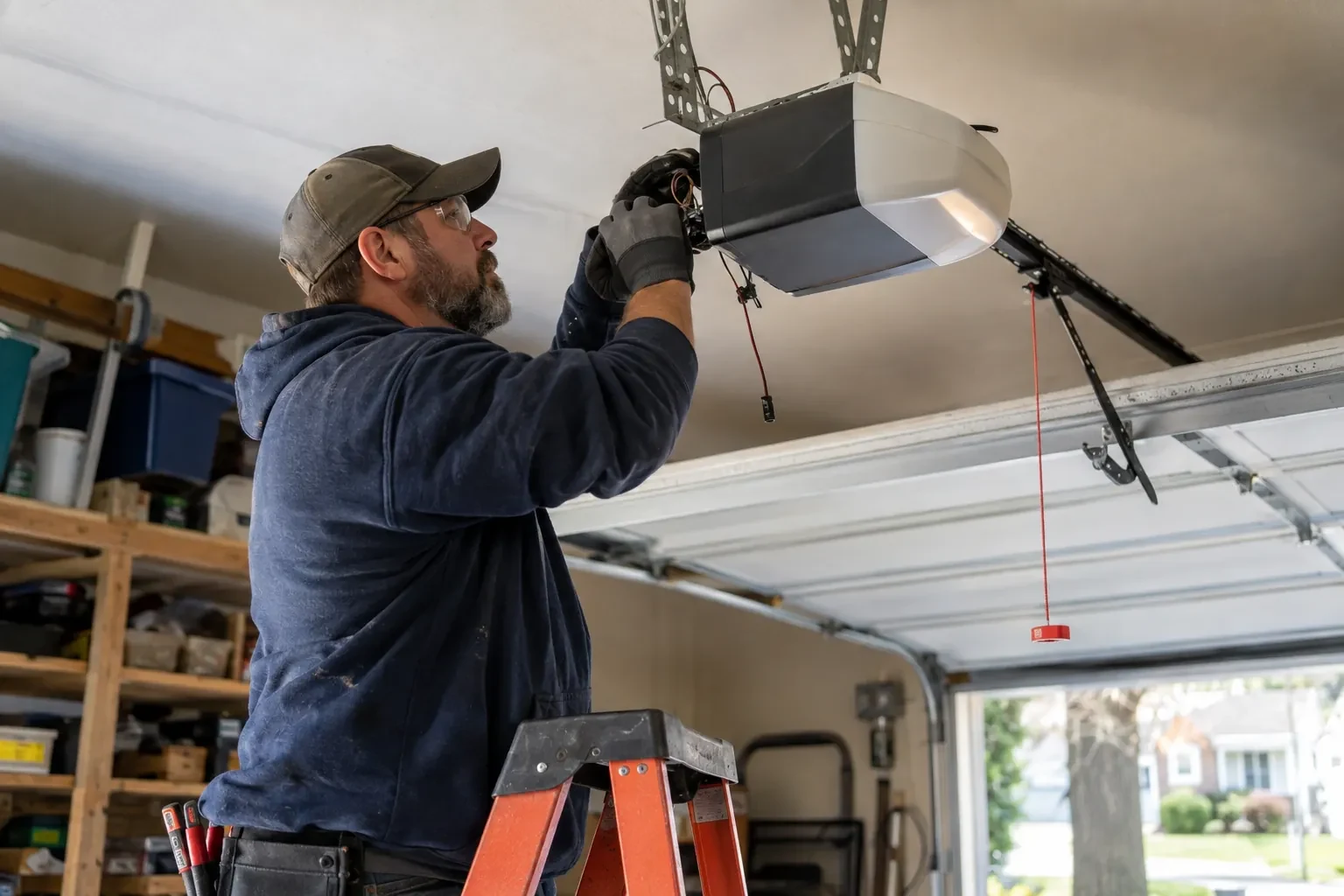
Openers
Openers & Access
Remotes that need pairing, keypads for the kids, controllers that report to your phone, and the motor that does the actual work. If it plugs in or runs on a battery, it lives in this group.
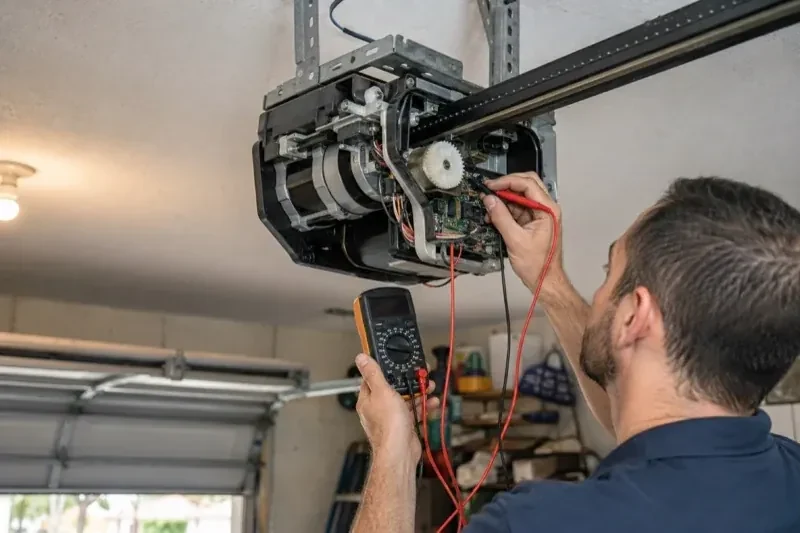
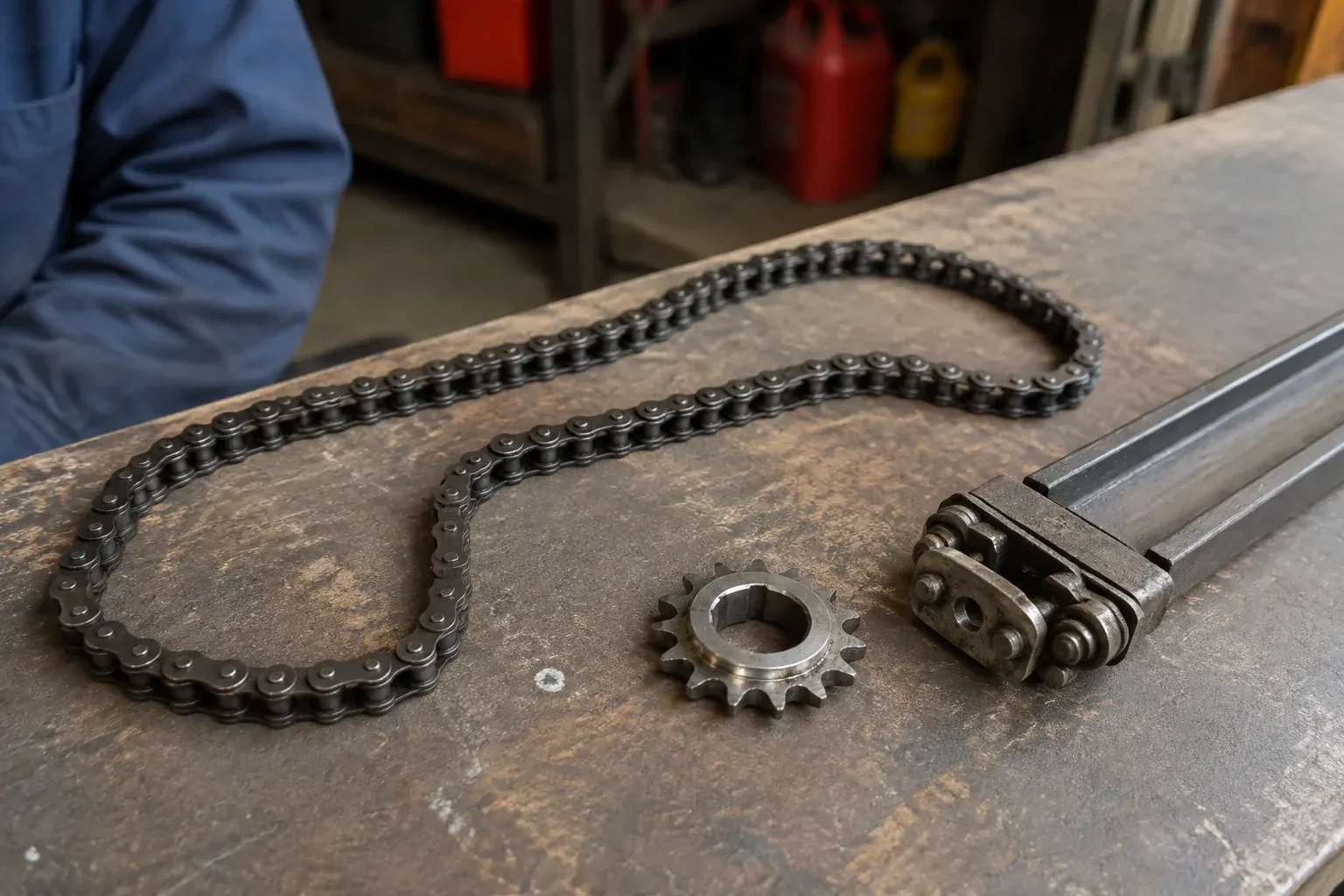
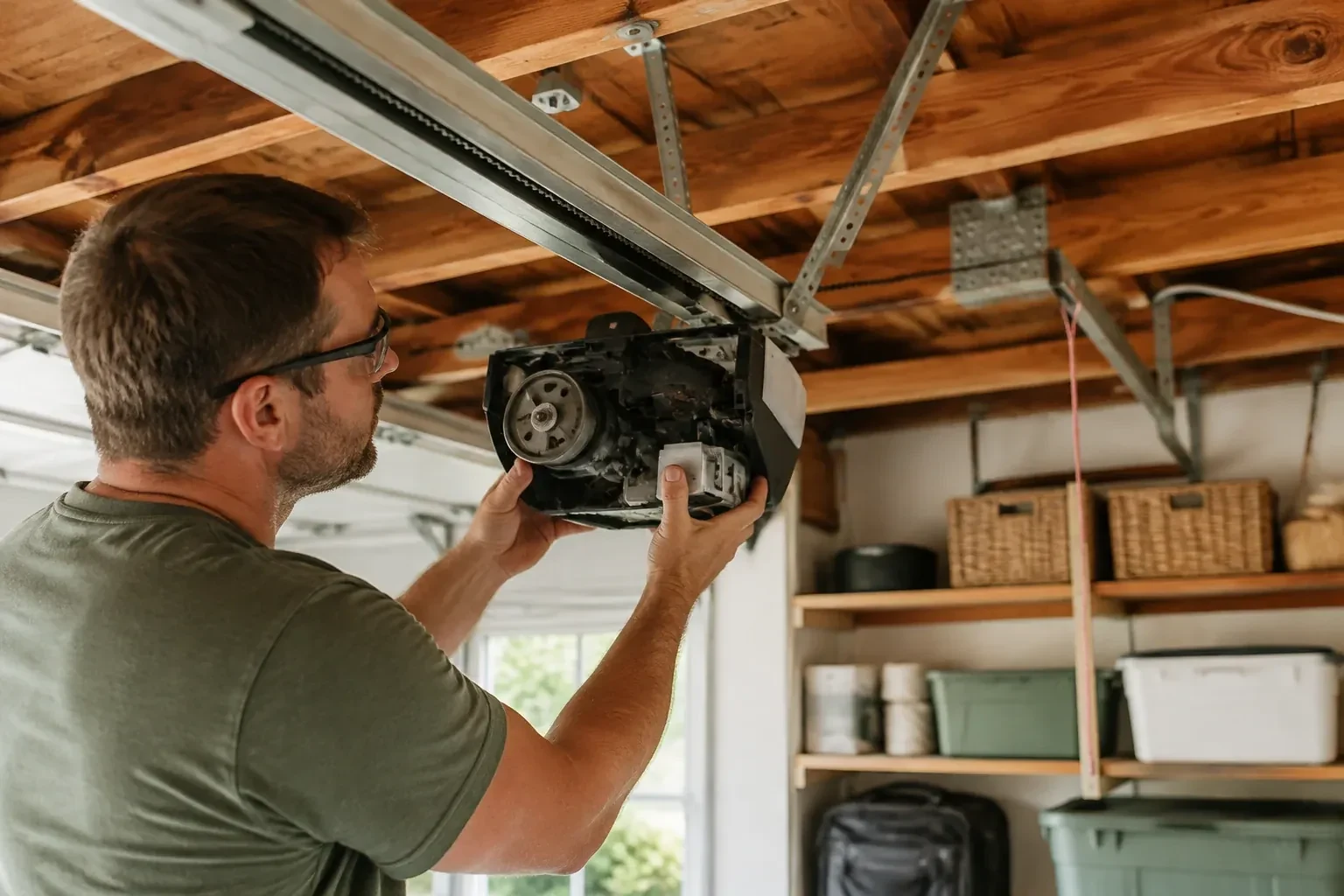
Which one do I need?
- The motor runs, the chain rattles along the rail, and the door does not move a millimetre.Garage Door Opener Diagnosis and Repair
- The chain hangs in a loop under the rail and slaps against it on every cycle.Chain-Drive Opener Repair
- The belt looks fine from a distance, but up close the rubber has cracked across the back in dozens of places and, in one spot, you can see the steel cords showing through.Belt-Drive Opener Repair
- You swapped the old wooden door for a heavier insulated steel one, and the twenty-year-old opener that was kept has never settled.Garage Door Opener Replacement
- The door will only go down while a finger stays on the wall button; let go and it stops or reverses.Photo-Eye Sensor Alignment or Replacement
- After the move, the previous owner's remotes are somewhere in another city and the keypad on the outside wall wants a code nobody wrote down.Garage Door Remote and Keypad Programming
Openers & Access
Operators, safety sensors, controls, and access systems.

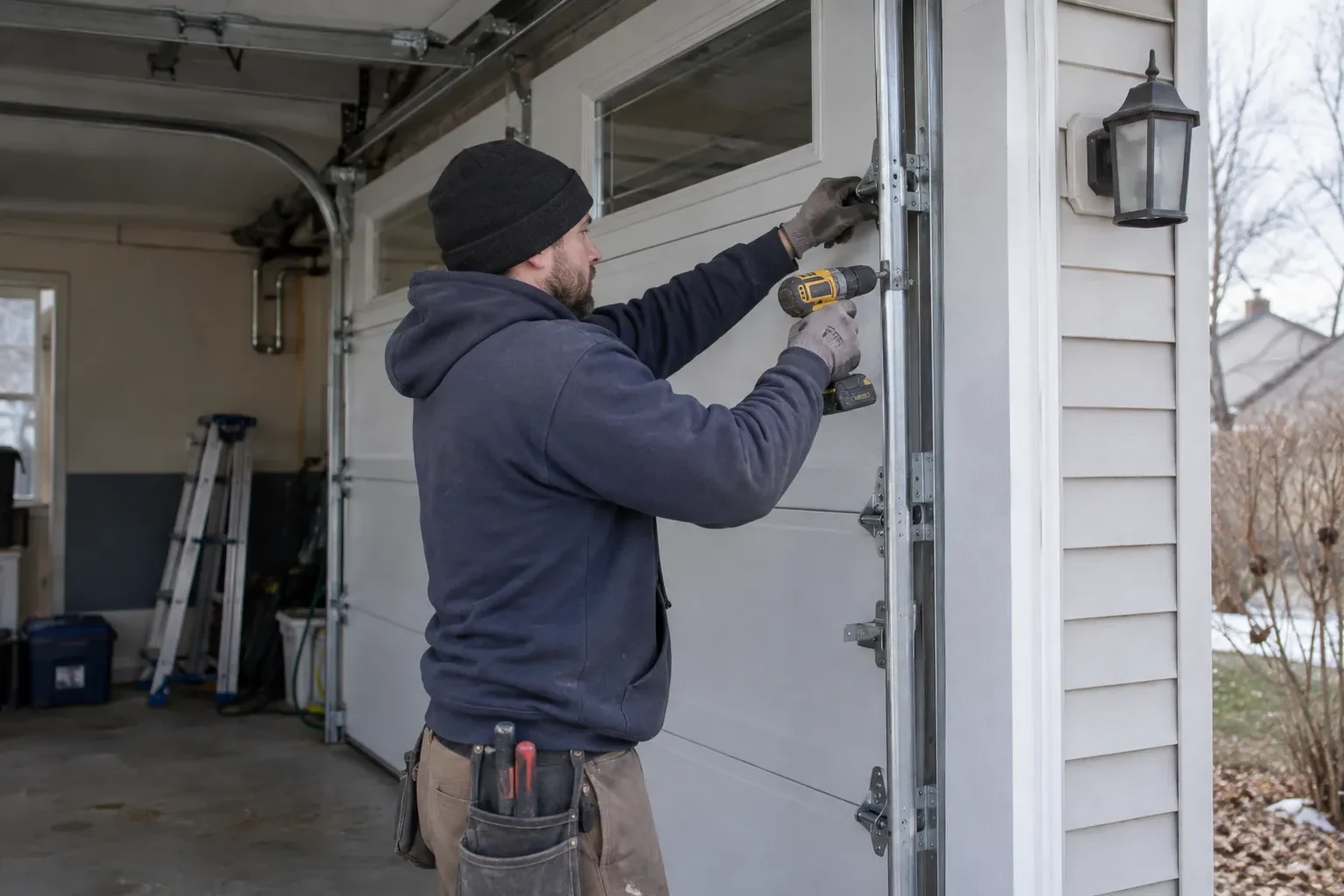
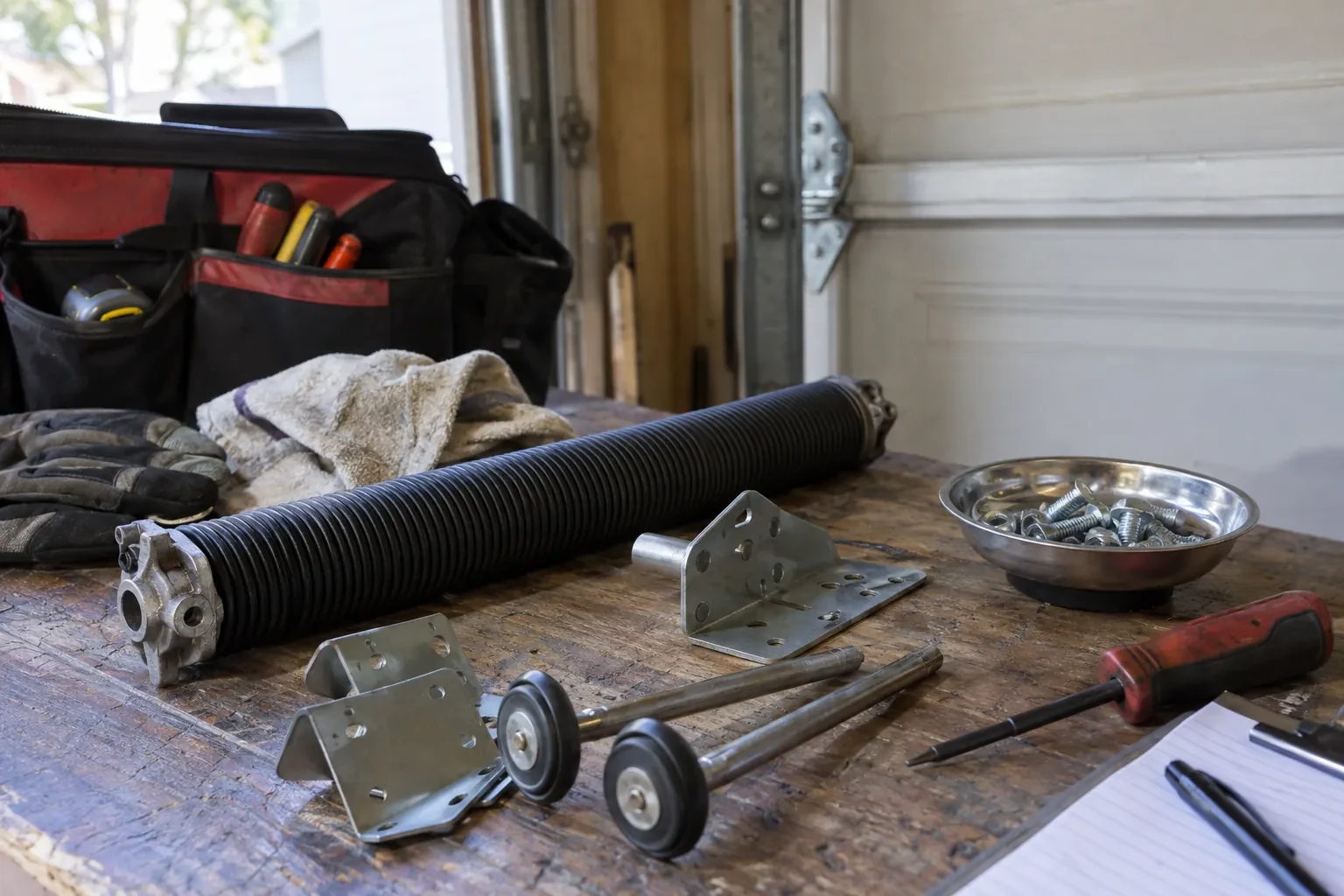
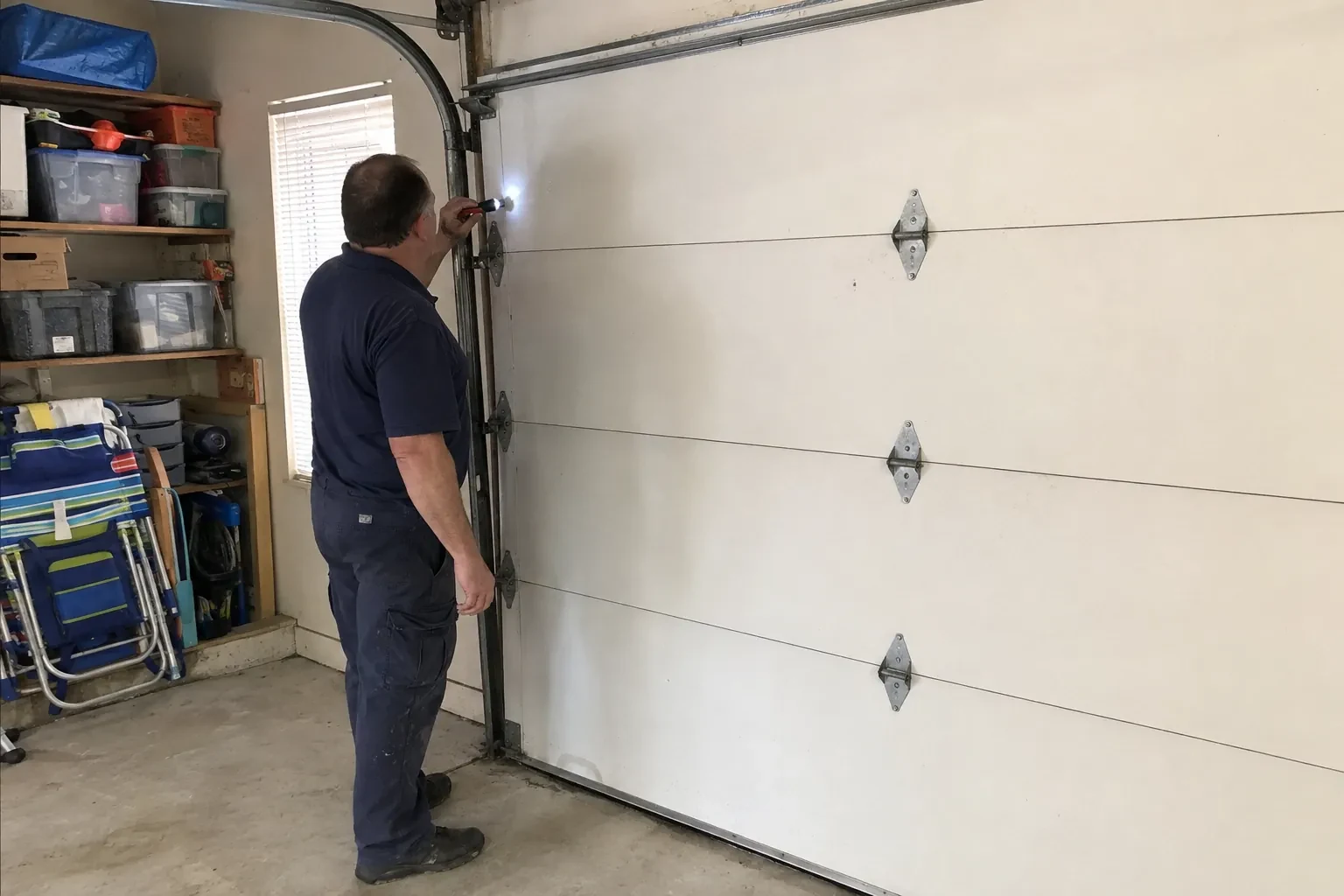
Garage Door Opener Diagnosis and Repair
What the blinking lights are saying
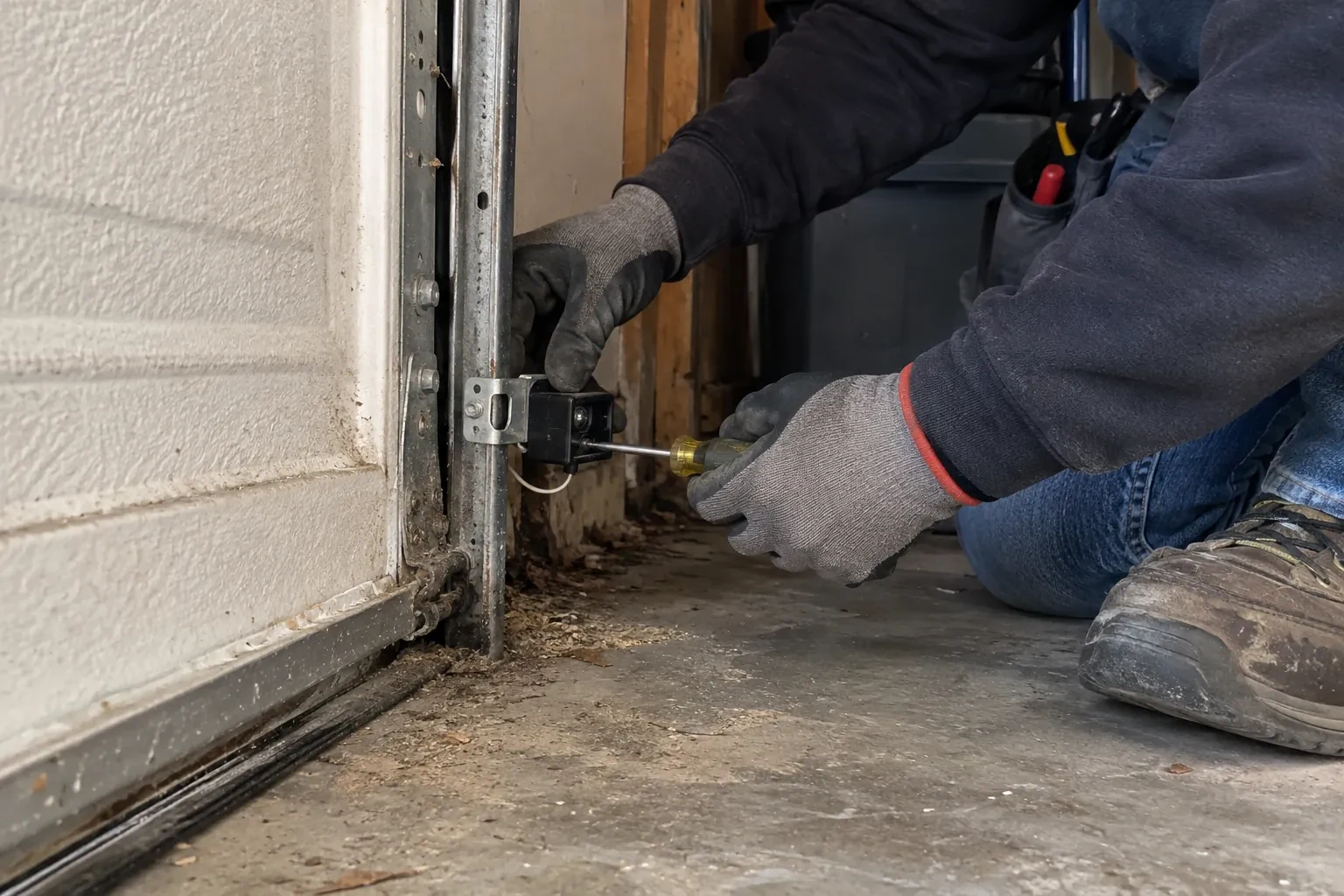
Many openers describe their own fault. The head unit flashes its light bulbs, or an up arrow and a down arrow, in a numbered pattern, and some display a code on the wall control. The technician counts the pattern, identifies the exact model from its label, and matches the two on the manufacturer's chart: one family of codes means the sensor circuit is open or obstructed, another means the motor was told to move and nothing turned, another means the door needed more force than the limit allows.
The code narrows the search; a hands-on test then confirms it, because a wiring fault can imitate a sensor fault.