Openers · Oakville
Chain-Drive Opener Repair
The chain hangs in a loop under the rail and slaps against it on every cycle.
In plain words
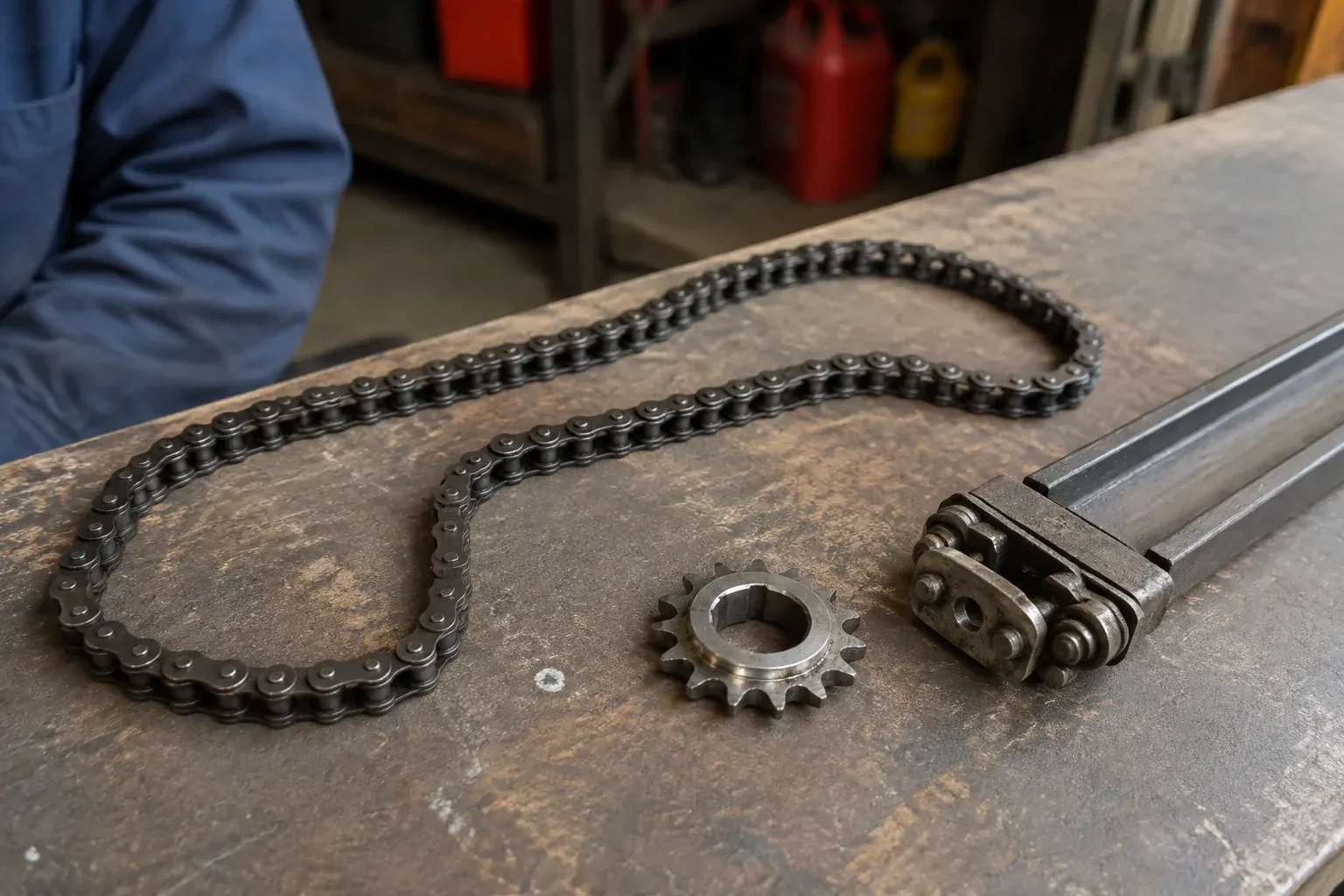
The trolley is the carriage that rides the rail carrying the door arm, and many chain-drive calls end there. If travel limits creep, the trolley runs onto the stop bolt at the end of the rail and the motor hums against it. If the chain was run off the sprocket, the trolley and the motor disagree about where the door is, and the door travels partway no matter how the limits are turned. The technician frees the trolley, puts the chain back in phase with the motor's closed position, resets the limits and confirms the release lever picks the door arm up cleanly.
How the visit goesThe door closes, touches the floor, then climbs straight back up as if it hit something. Nothing is in the way, the sensor lights are steady, and it has been doing this since the weather turned.
Chain-Drive Opener Repair
How the visit goes
Rail, hangers and the bracket in the wall
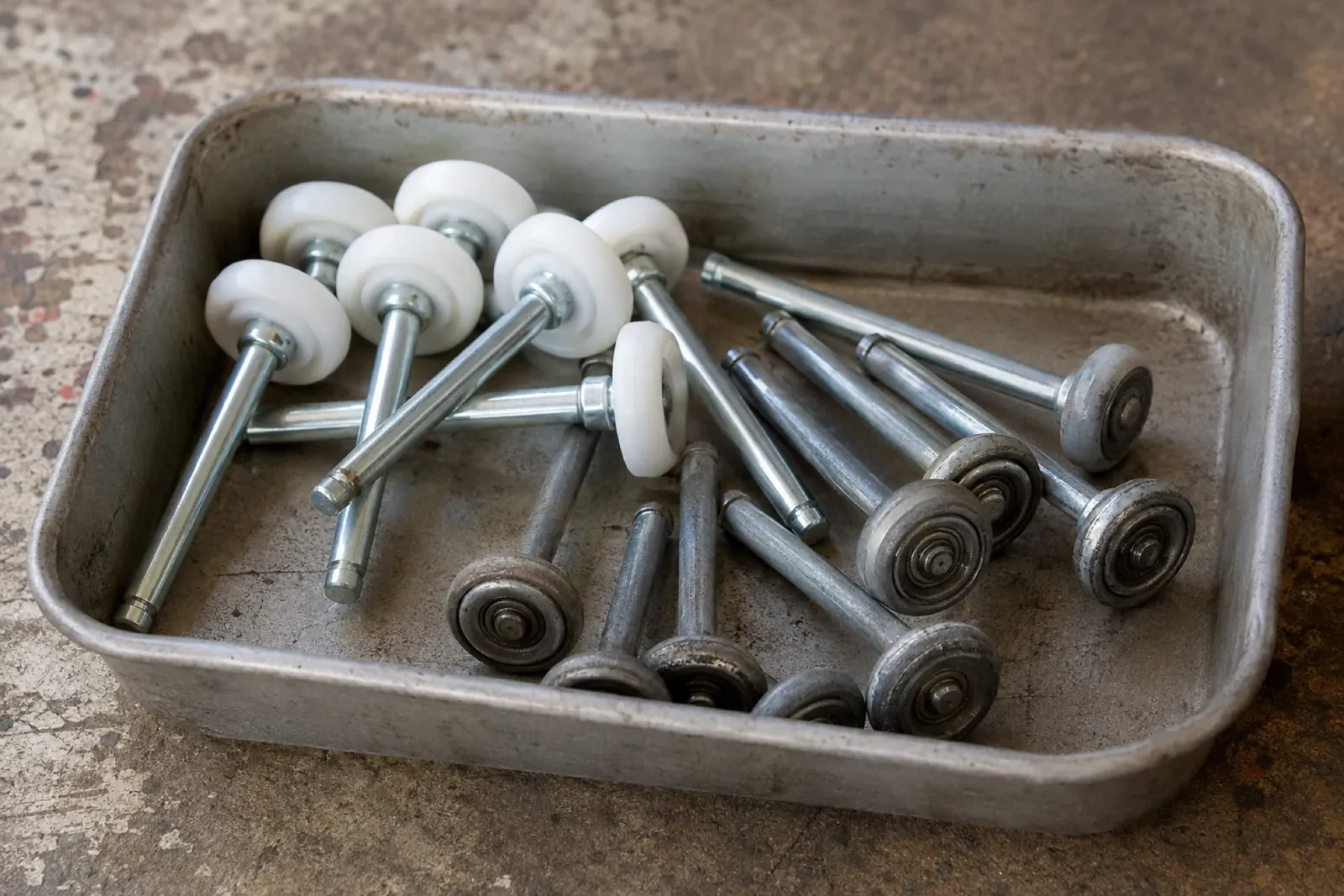
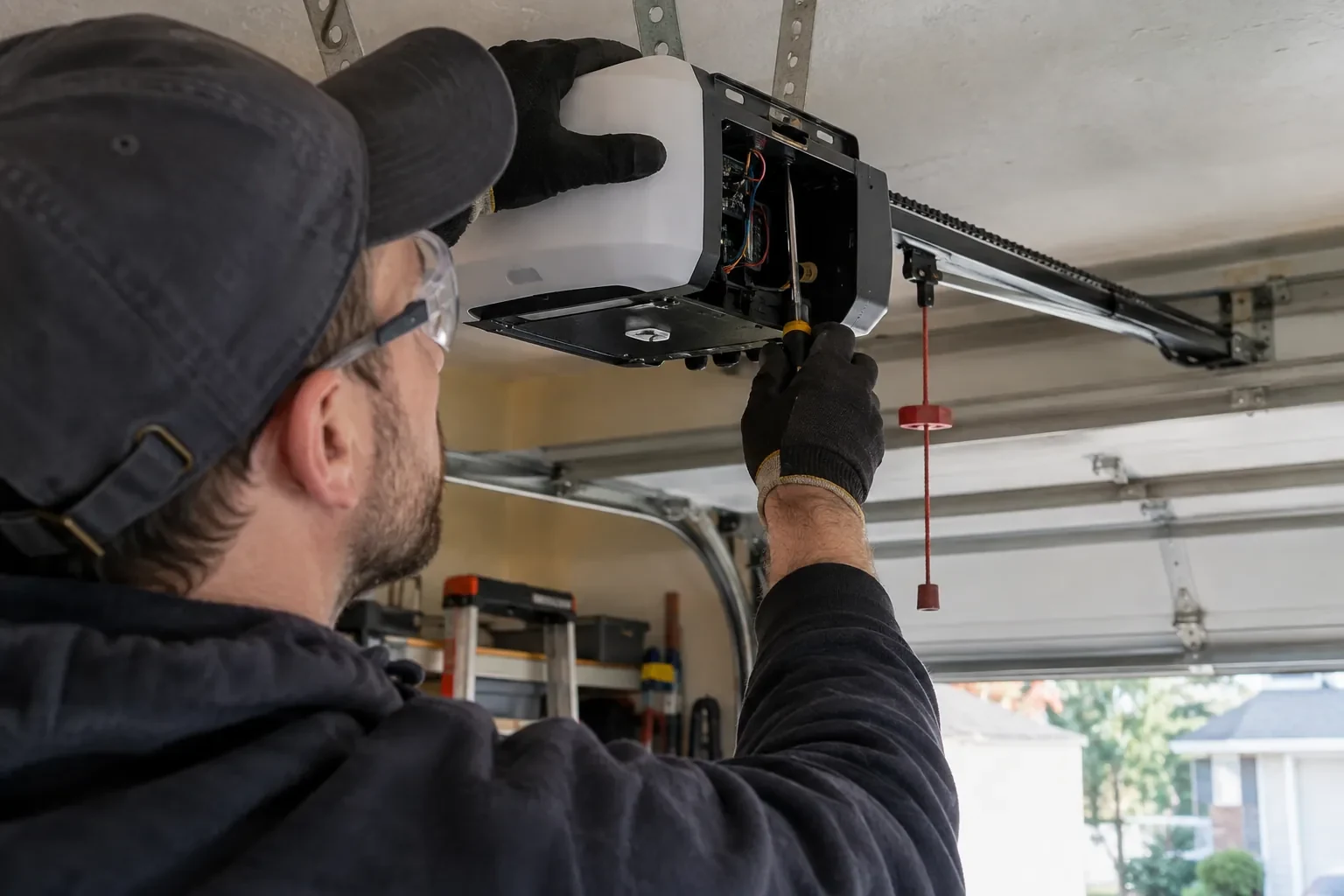
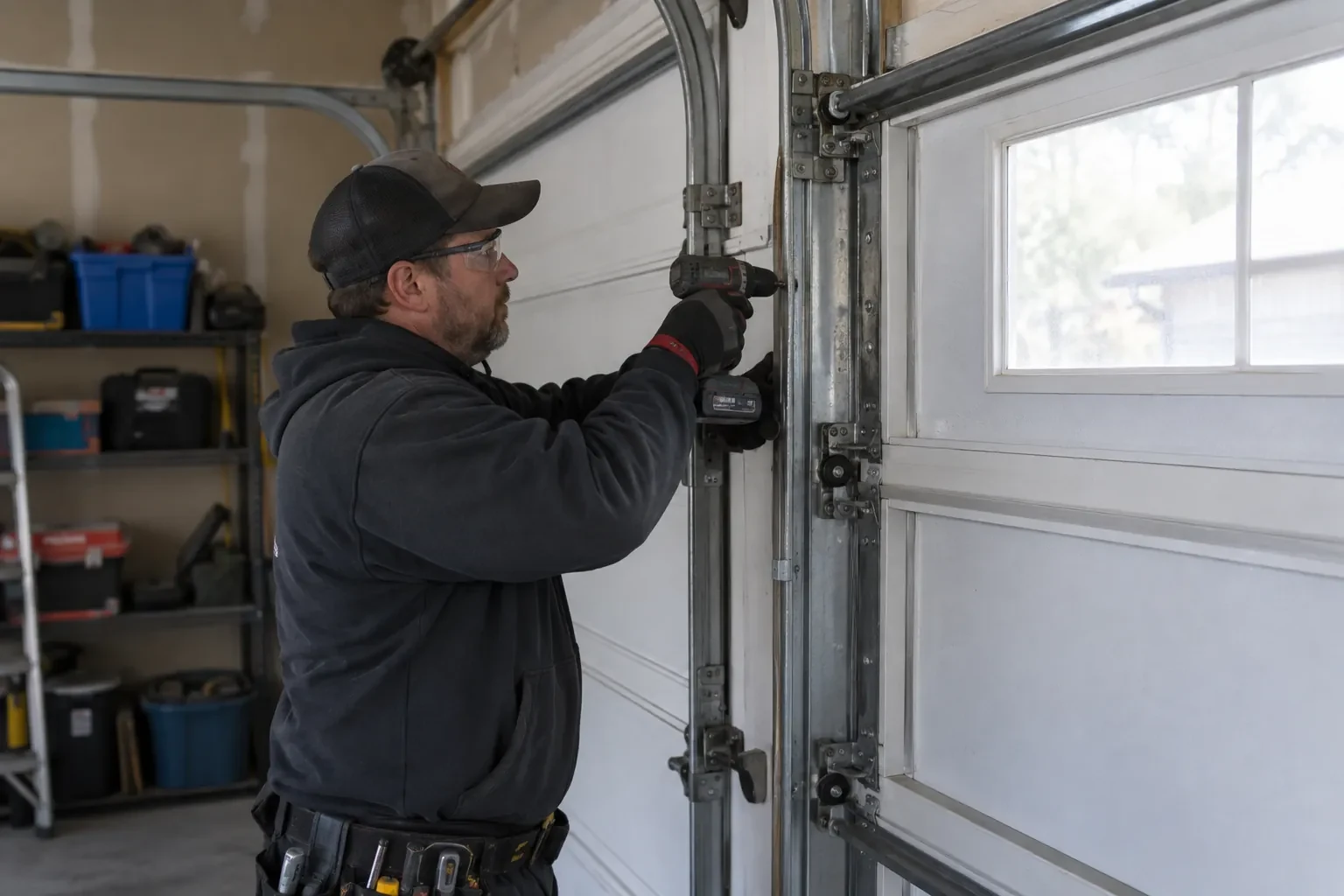
The rail is a structural part of the drive, and a chain cannot run true on a rail that moves. The technician checks that the perforated angle iron hanging the head from the joists is tight and stiff, that the rail is level along its length and angled slightly down away from the header, and that the splice plates at the rail joints are snug. The header bracket above the door is checked for lag screws that have loosened in the wood, which lets the whole rail lift a little on each cycle and shows as a rattle along the garage. Loose hardware is tightened or replaced before tension is set, since a flexing rail makes the measurement meaningless.
Fitting a new chain
A stretched or rust-bound chain is replaced as a unit. The technician disconnects the door, slackens the tensioner and opens the master link, then draws the old chain off the sprocket, through the trolley and around the idler at the door end. The new chain, sized to the rail length, is threaded the same way, joined at the master link with the clip facing away from the direction of travel, and settled onto the sprocket teeth by hand. Any cable section on a combined chain-and-cable drive is checked for fraying and renewed if needed. The chain is then tensioned to the rail's specification and the trolley run by hand along its full length.
Two tests once a month
The protection built into the operator only counts if it still works, and two short checks each month keep you sure of it. Lay a scrap of 2x4 flat on the floor under the middle of the door and close it from the wall button; the door should climb back to open the moment it touches the wood. Then, with the door closing again, pass a broom handle through the beam of the low sensors; the door should reverse just the same. If either test is failed, stop using the operator and book an adjustment. It is a setting, and a small one, but it is the one that matters most.
Chain-Drive Opener Repair
In the van
Inner and outer trolley
Idler sprocket or pulley
Chain tensioner nuts and shaft
White lithium grease
Rail hangers and header bracket
Chain-Drive Opener Repair
What affects the quote
Rail shape and door height
A T-rail and a square rail take different chains and tension figures, and an 8 ft door runs a longer rail and chain than a 7 ft door, so the length of chain on the quote follows the rail.
The gear kit for your model
Drive gear, worm gear and sprocket shaft assemblies are made to fit a particular head, and the kit for an older or less common unit is a different item from the one for a current model.
Which parts of the drive have worn
A chain that only needs tensioning, a chain that must be replaced, and a stripped gear and sprocket assembly are three different jobs, and the inspection under the head cover decides which one the quote describes.
What to have ready
- Is the trolley stuck at the very end of the rail, near the motor or near the door?
- Does the door stop short, reverse at the floor, or open only partway?
- Can you send a photo of the motor head, the rail and the chain?
Chain-Drive Opener Repair: questions
QuestionsWhy is there white or grey dust on top of my opener?
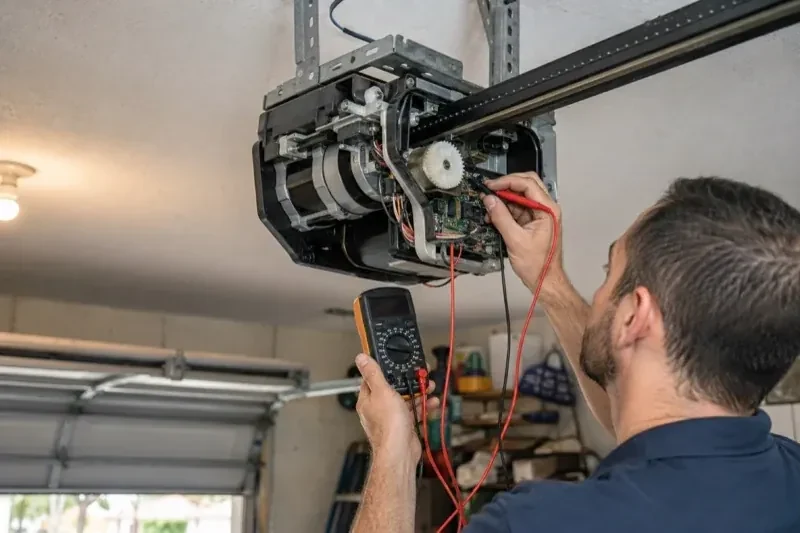
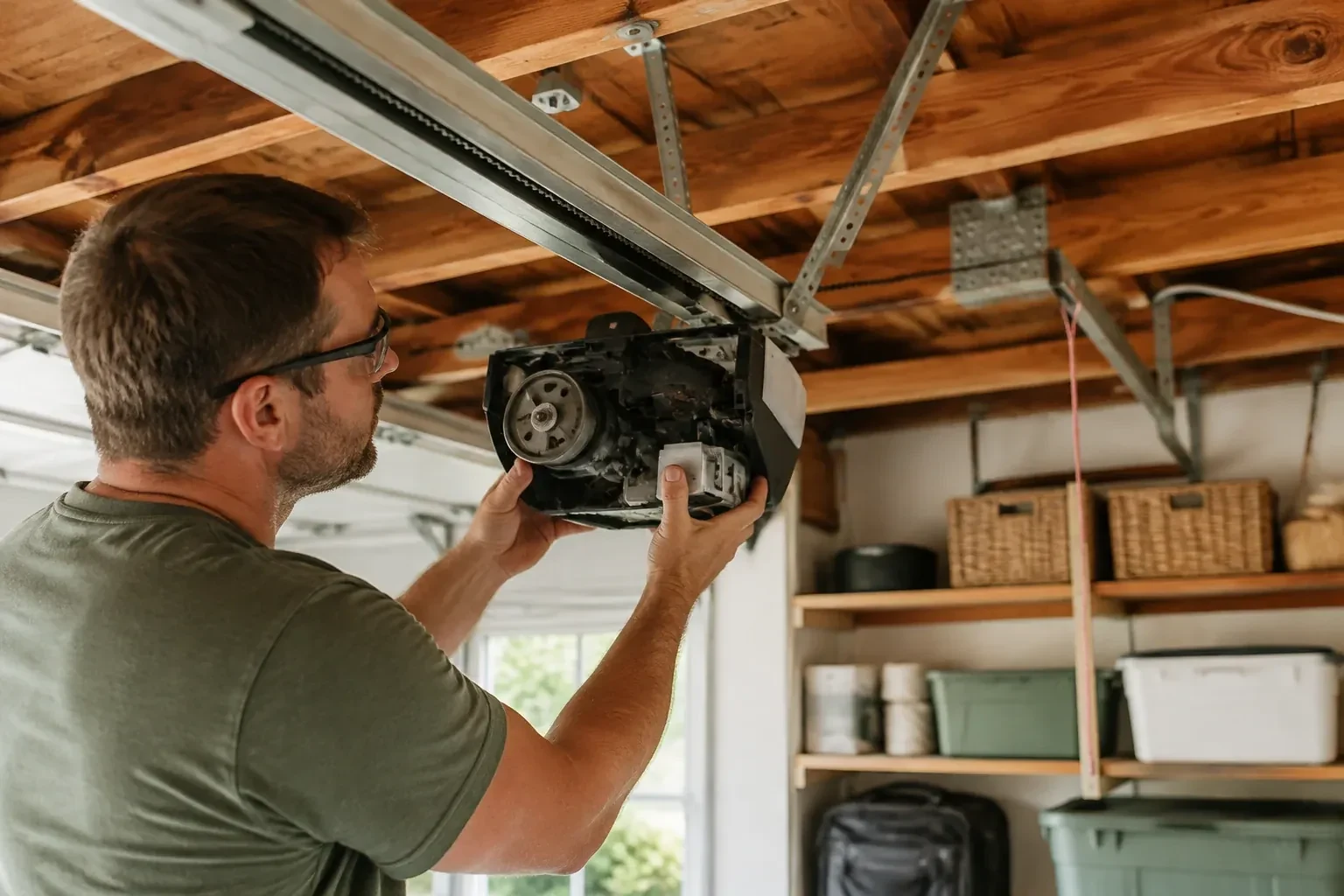
Those are shavings from the plastic drive gear inside the head. The gear meshes with a steel worm on the motor shaft, and when it wears the teeth flake off and collect under the cover. Once you see shavings the gear is close to stripping, after which the motor runs and the door stays still. Replacing the gear and sprocket assembly before that happens turns a stranded morning into a planned repair.
My garage is detached and unheated. Does that change the repair?
It shapes it. Cold thickens grease and stiffens a chain with any rust on it, so the technician cleans and regreases the rail and gears, replaces a rust-bound chain rather than tensioning it, and sets force so the door moves at low temperature without the operator being oversensitive. Salt corrosion on the chain and bottom hardware from vehicles is checked. The advice afterwards leans on keeping the threshold clear so the seal does not freeze to the slab.
Can you turn the force up so the door closes on cold mornings?
Force is set to the lightest level that moves the door reliably, and it is raised only a little for a cold garage. Turning it up further to overcome a heavy door or a seal frozen to the slab is not done, because too much force interferes with the safety reversal and can bend the top section. If the door is hard to move in the cold, the springs, rollers or the frozen seal are dealt with instead.
Related services
- Belt-Drive Opener RepairThe belt looks fine from a distance, but up close the rubber has cracked across the back in dozens of places and, in one spot, you can see the steel cords showing through.
- Garage Door Opener ReplacementYou swapped the old wooden door for a heavier insulated steel one, and the twenty-year-old opener that was kept has never settled.
- Photo-Eye Sensor Alignment or ReplacementThe door will only go down while a finger stays on the wall button; let go and it stops or reverses.