Openers · Oakville
Emergency Release Repair
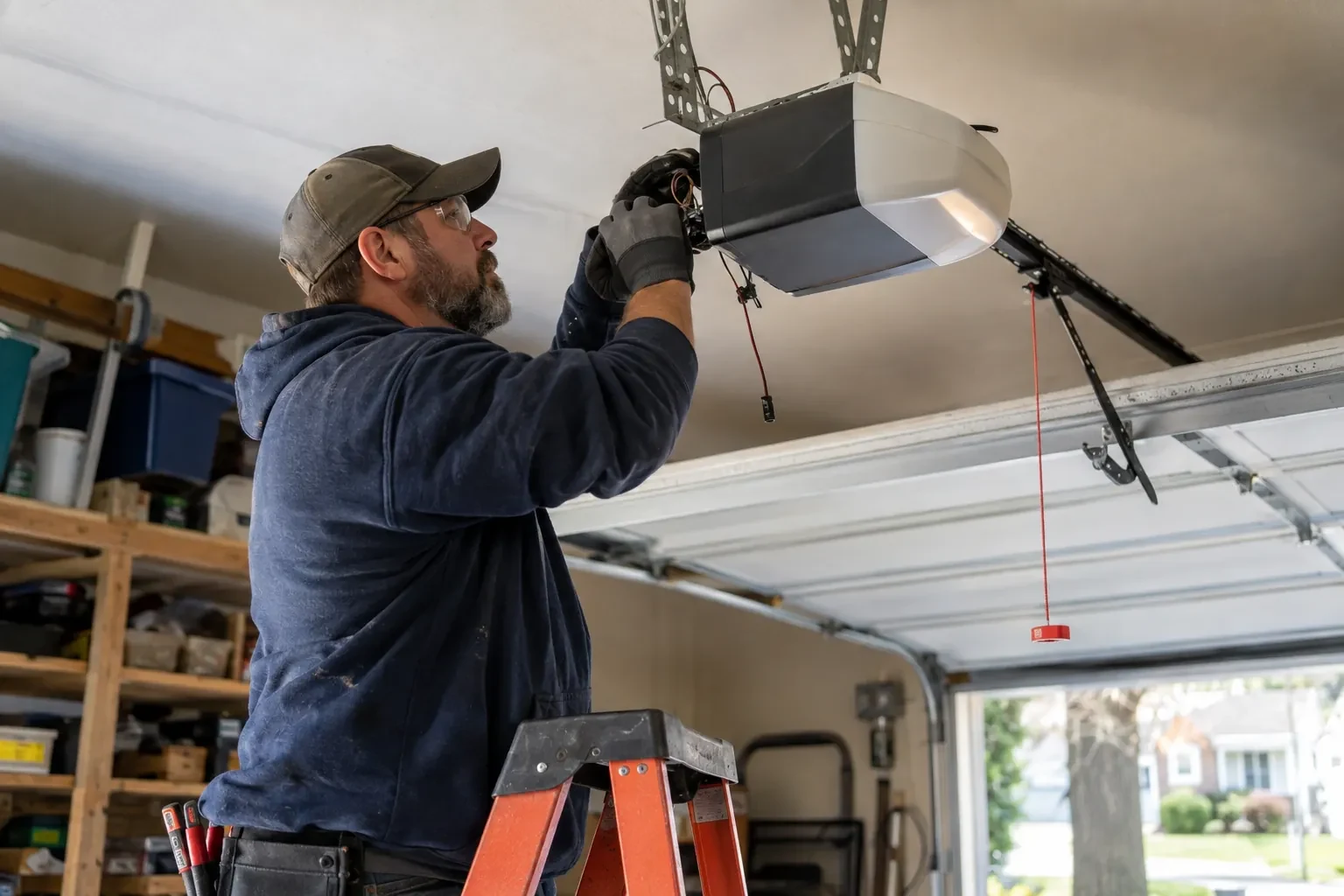
A previous owner knotted the release cord around the rail and stacked storage shelves right beneath it.
In plain words
Emergency release repair puts the manual disconnect on an opener into working order. That disconnect is the red handle on a cord below the rail, the spring-loaded lever it pulls, and the trolley that lets go of the door when the lever is thrown and grips it again when the two are brought back together. When any of those parts is missing, bent, worn or set at the wrong height, moving the door by hand in an outage becomes a struggle and reconnecting it afterwards a puzzle. The technician fits parts made for that opener, sets the handle where it belongs, and proves the sequence from disconnect to reconnect.
How the visit goesA previous owner knotted the release cord around the rail and stacked storage shelves right beneath it. You only discovered this in the dark, with the power off, a flashlight in your teeth and a car that needed to be somewhere.
Emergency Release Repair
How the visit goes
Reading the release as a chain of parts
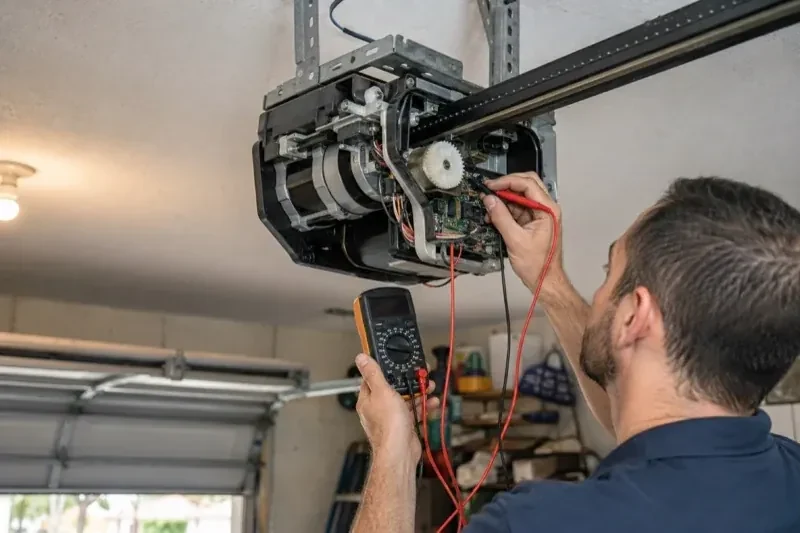
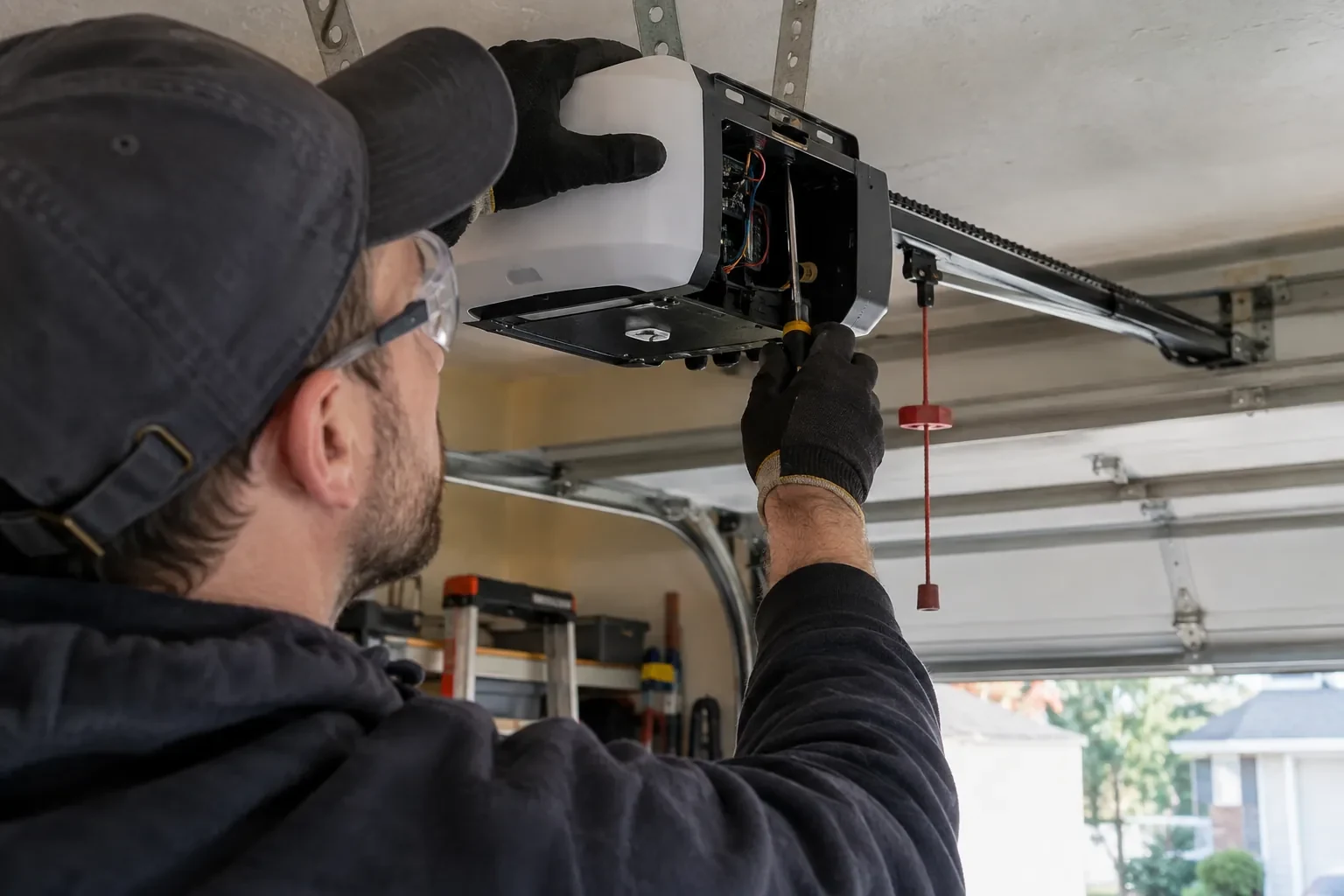
With the door settled, the release is inspected link by link rather than as a single handle. The cord: frayed, knotted, sun-rotted or cut short. The handle: present, red, and the right shape to grip. The lever on the trolley: does it swing fully to the release position and snap back, or is it bent, sticky or missing its spring. The trolley and carriage: are the latch surfaces worn, is the body cracked, is the arm to the door straight. The stops at either end of the rail: has the trolley been driven into one. Each link is checked so the repair replaces what failed rather than the part nearest to hand.
Freeing a trolley from the stop bolt
A trolley jammed against the stop at the end of the rail is freed rather than forced. The release is pulled so the door is out of the picture, the chain or belt tension nut is backed off a few turns to give the trolley room, and the motor is run so the trolley walks away from the stop. The travel limit that let it run too far is then adjusted, the chain or belt is re-tensioned to the sag the maker specifies for that rail, and the trolley is reconnected. Because the limits were touched, the door is cycled and the reversal tests are repeated before the job is called done.
Keys for the outside release
Where an outside key release was fitted or repaired, you leave with two keys and the cylinder proven from the driveway. One key belongs on your ring; the other belongs somewhere outside the garage, with a neighbour or in a lockbox, since a spare inside the garage is behind the very door it opens. In winter, keep the cylinder face clear of slush and give it a puff of dry lock lubricant before the cold sets in. The release only disconnects the door; lifting still happens by hand, using the door's handle, so the balance check the technician did today is what makes that lift easy.
Emergency Release Repair
In the van
Release cable and clips
2x4 offcut for the reversal test
Garage door lubricant
Hole saw for the top section
Door arm, clevis pins and clips
Emergency Release Repair
What affects the quote
Door work found by the balance test
If the disconnected door proves heavy or drifting, spring, cable or roller work comes before the release is put back into use, and that door-side work is quoted as its own item.
Outside key release: repair or new
Renewing a cylinder, cable or keys on an existing outside release is one line; cutting the door and fitting a complete kit where none exists is another, and both are named separately.
Damage from a door that dropped
A release pulled on an unbalanced open door can bend the arm, the carriage, a bracket or a panel. Anything that took the impact is listed on its own once it has been seen.
What to have ready
- Does the garage have a side door or a door into the house?
- Does the opener run along the rail on its own without moving the door?
- Do you lose power often, and would battery backup interest you?
Emergency Release Repair: questions
QuestionsWhat should I tell you when I call?
What the release did: handle missing, cord snapped, trolley will not reconnect, door let go on its own. Where the door was at the time and where it is now. Whether the opener is a chain, belt or screw unit on a rail, or a wall-mounted one beside the door. Whether there is an outside key release and whether you have its key. And whether the garage has a side door or a door into the house. That shapes what comes on the truck.
Why does the trolley run but never reconnect to the door?
Three usual causes. On many rails, pulling the cord back toward the opener deliberately holds the lever out for a spell of manual use, and someone forgot to return it. Or the trolley latch teeth or the release arm are worn or bent, so the two parts pass without catching. Or the carriage sits at the wrong point for the powered trolley to meet, since reconnecting is meant to happen during an opener cycle, not by pushing the door shut by hand. Each is a short fix once identified.
The motor hums and the trolley is jammed at the end of the rail. What happened?
The trolley has been driven into the stop bolt or stop tab, usually because the travel limit let it run too far. The technician frees it by pulling the release, slackening the chain or belt a few turns, running the motor so the trolley walks off the stop, then correcting the travel limit and re-tensioning the drive. The reversal tests are repeated afterwards, since the limits were changed.
Related services
- Chain-Drive Opener RepairThe chain hangs in a loop under the rail and slaps against it on every cycle.
- Belt-Drive Opener RepairThe belt looks fine from a distance, but up close the rubber has cracked across the back in dozens of places and, in one spot, you can see the steel cords showing through.
- Garage Door Opener ReplacementYou swapped the old wooden door for a heavier insulated steel one, and the twenty-year-old opener that was kept has never settled.