Repairs · Oakville
Garage Door Panel Replacement
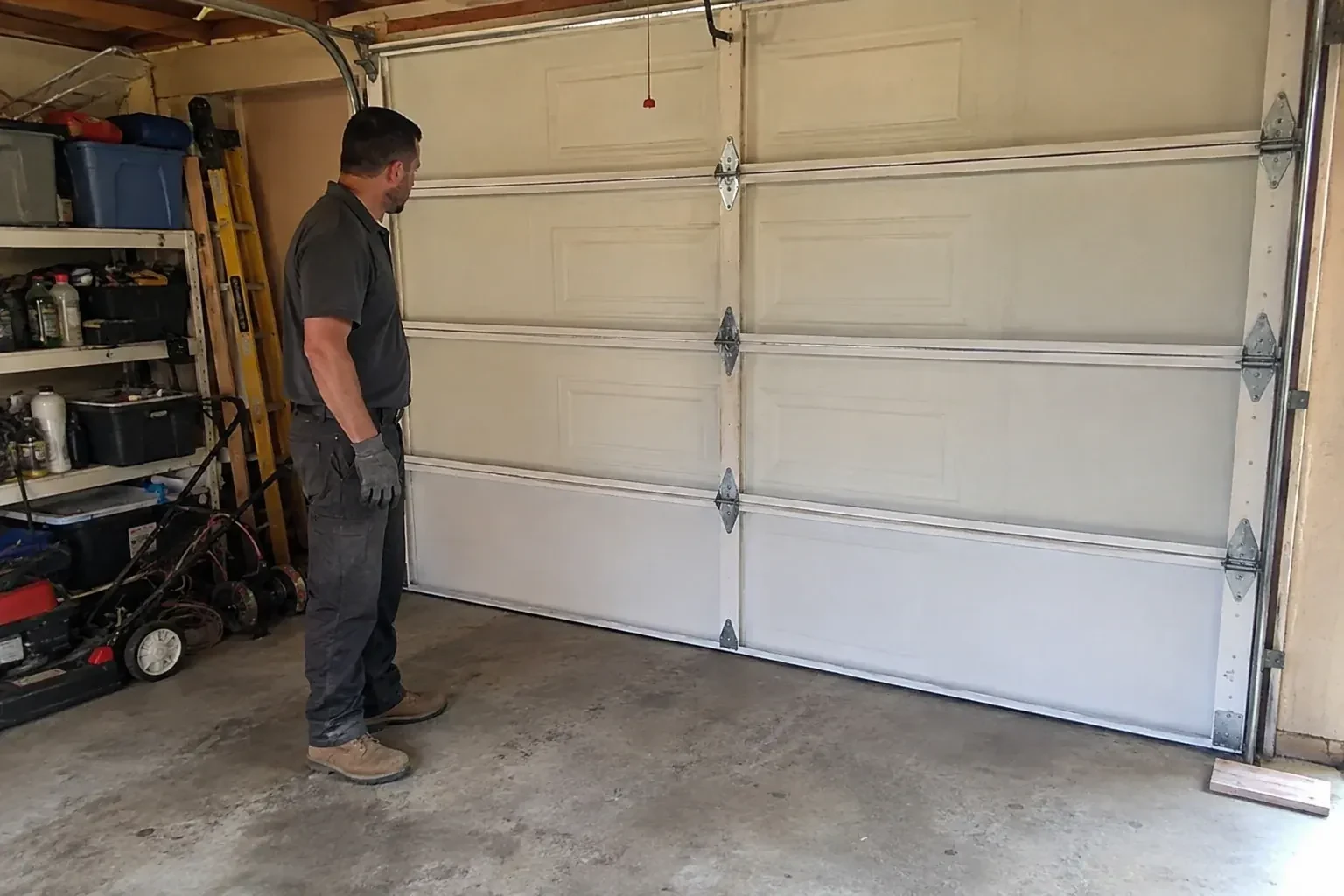
Years of slap shots have peppered the lower two sections with dents.
In plain words
The first real decision is whether a section is the right scale of repair. A shallow dent in the middle of a steel skin can often be worked out or filled and painted. A crease that reaches a joint, an end stile or a hinge point changes how the section carries load and is usually a section replacement. Damage spread over several sections, widespread rust, or a door whose design is no longer made pushes the conversation toward a new door. Panel replacement sits in the middle of that range, and a good assessment places your door on it honestly before anything is ordered.
How the visit goesA stray ball went through one of the window panes in the top section. The glass is gone, the frame around it is cracked, and the steel beside the opening is pushed in, so the whole section is in question rather than one pane.
Garage Door Panel Replacement
How the visit goes
One section, or is it time for the whole door?
A single damaged section on a door that is otherwise sound is a clear case for a section. The picture changes when damage crosses two or three sections, when rust has taken hold along more than one edge, when older sections have warped or delaminated, or when the design is no longer produced. It also changes when you would like insulation, windows or a different look that only a new door provides. The technician lays the two options side by side, describing what each includes and what you would have afterwards, so the choice is made on the whole door's condition rather than on the one dent that prompted the call.
Removing the damaged section
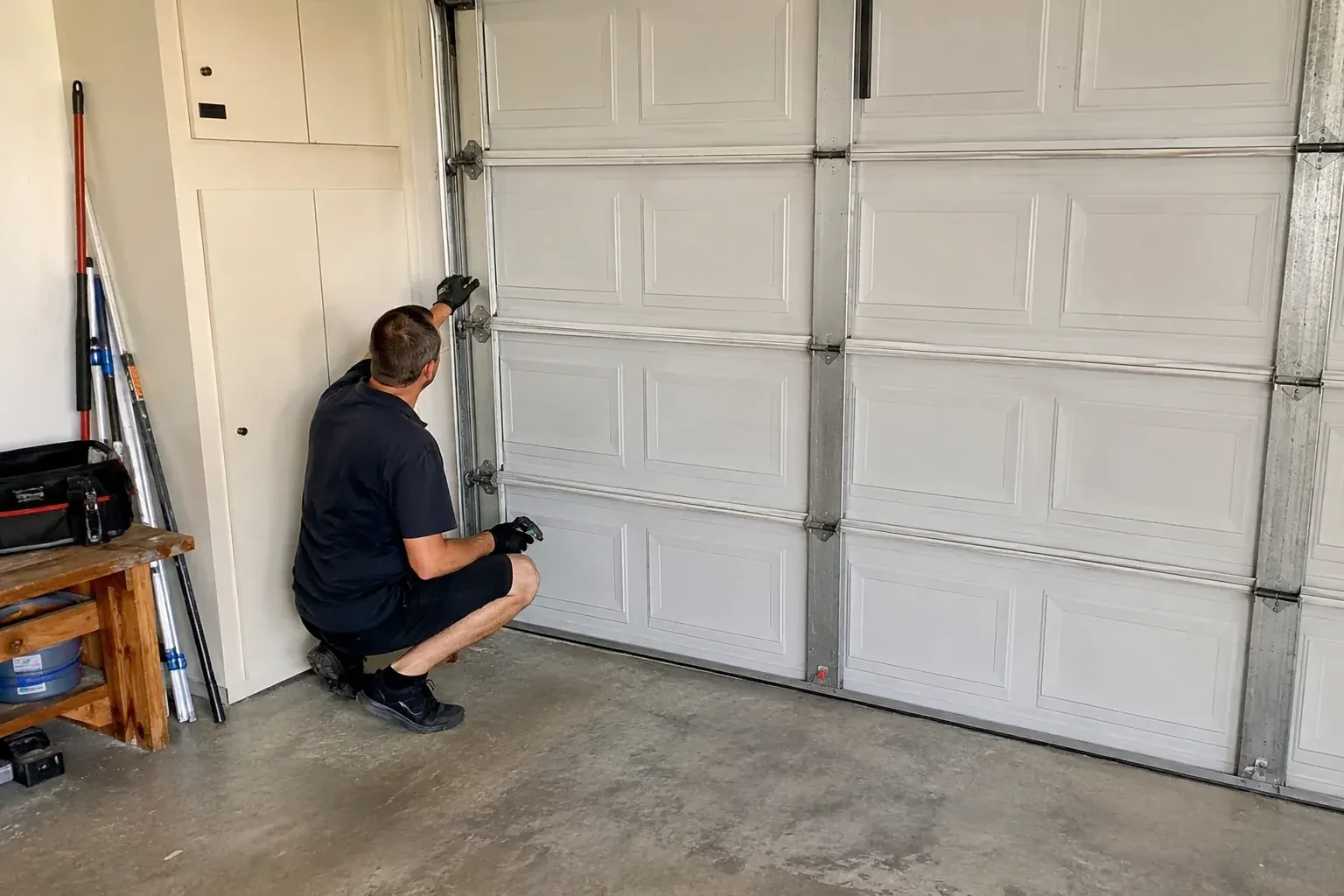
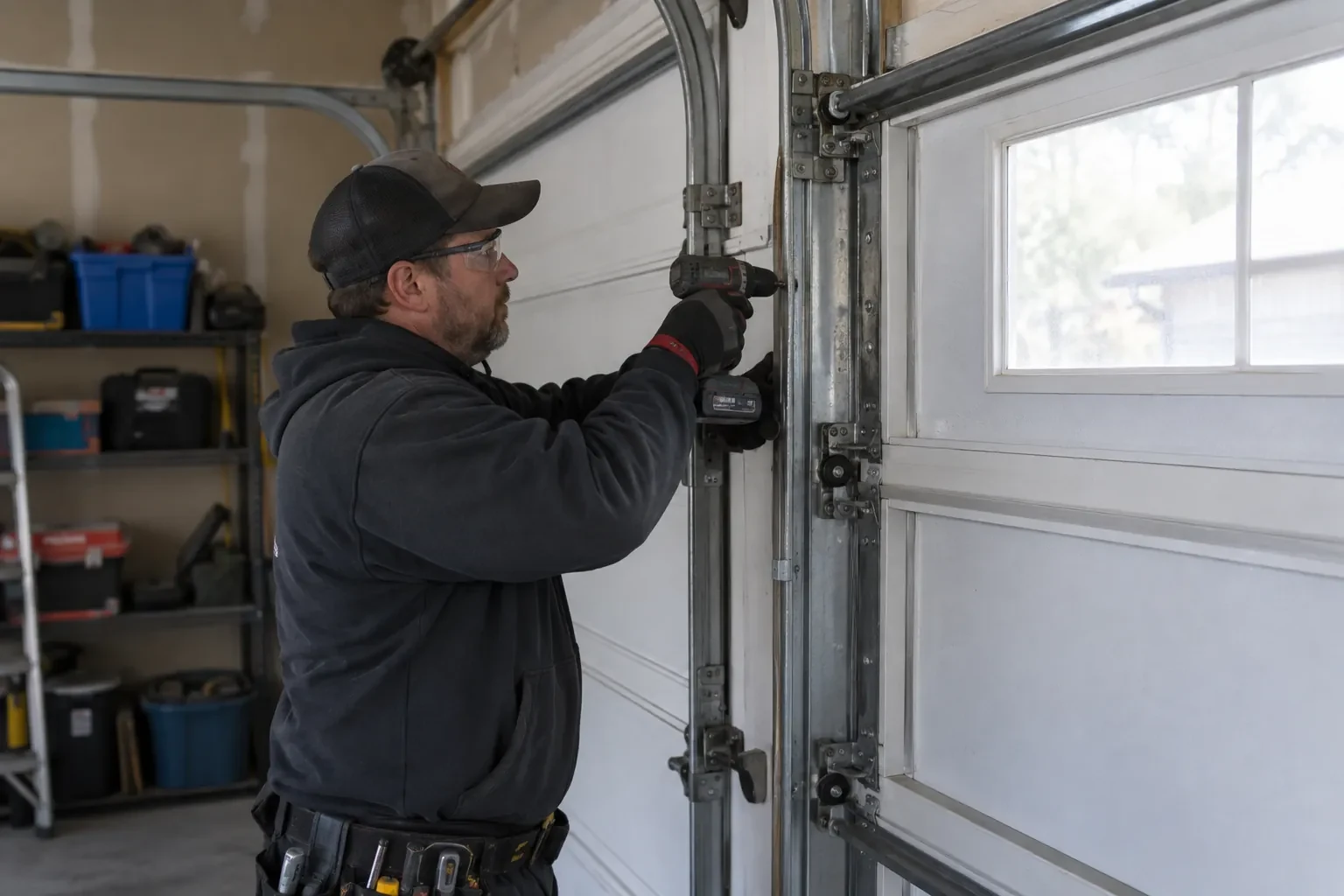
With the door secured and, where relevant, the springs unloaded, the hinges joining the damaged section to its neighbours are unbolted and the rollers slid out of the tracks. A section is wider than the opening between the tracks, so it comes out by tilting one end inward and walking it clear, occasionally after loosening a track bracket to gain a few millimetres. Two people handle a wide or insulated section because of its weight and its sharp edges. Once it is out, the technician checks the exposed edges of the sections above and below for damage that was hidden while the door was assembled.
Hinges, rollers and a monthly minute
The new hinges and rollers benefit from the same light care as the rest of the door. Once a month, with the door closed, glance along the hinges for a screw that has backed out and give the rollers a spin to feel for roughness. Twice a year, put a small amount of garage-door lubricant on the hinge pivots, roller stems and bearing plates, wiping off the excess so it does not gather dust. Springs can take a light film too. Tracks should stay dry and clean rather than greased, since grease there collects grit and makes the rollers skate.
Garage Door Panel Replacement
In the van
Horizontal reinforcement strut
Garage-door lubricant
Bottom brackets with cable tabs
Bottom seal retainer and astragal
Matching replacement section
Garage Door Panel Replacement
What affects the quote
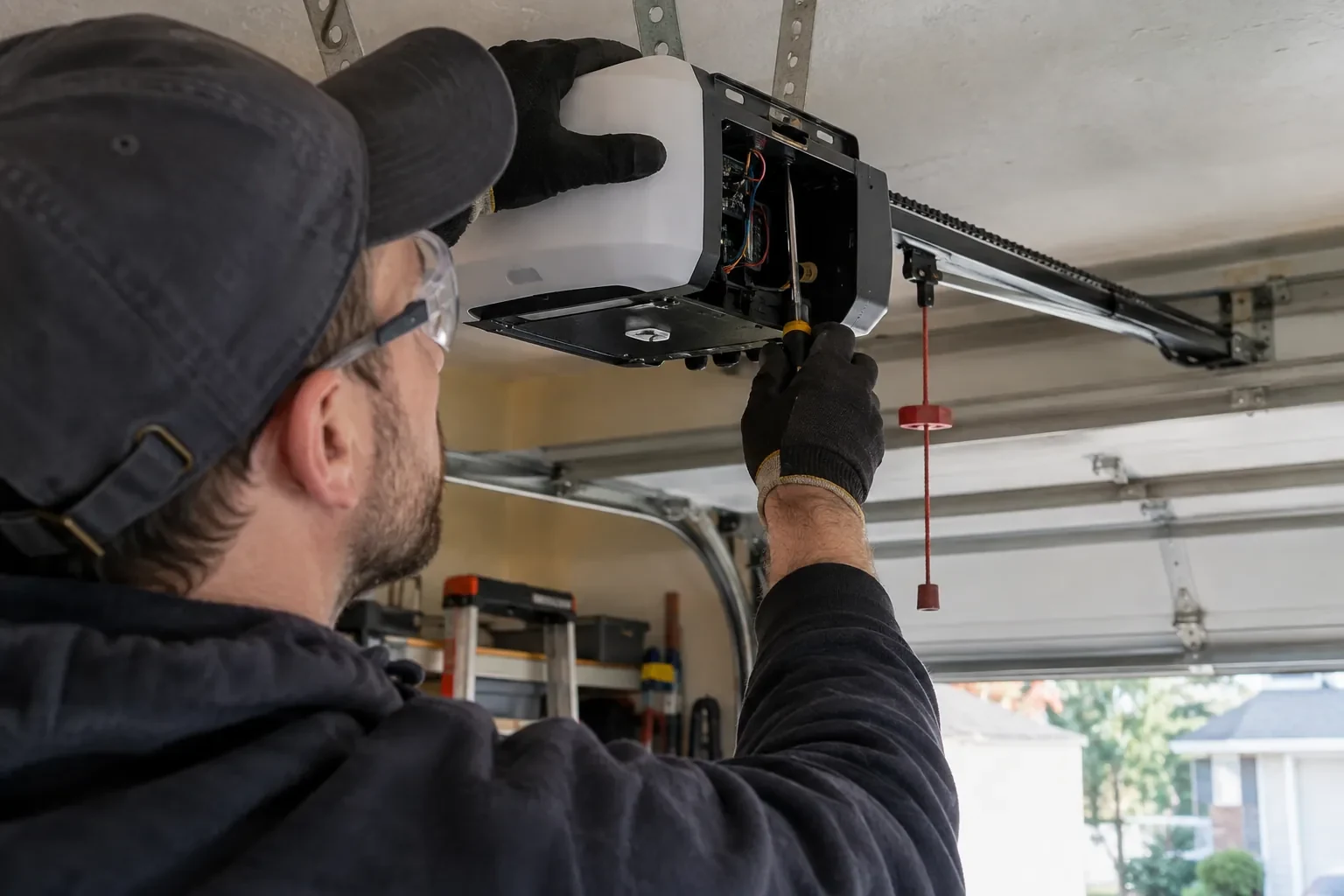
Opener adjustments afterwards
Resetting the opener's limits and force and testing the safety reversal is part of finishing the job. Where the opener arm bracket or a worn trolley needs replacing as well, that hardware is listed.
Spring work required
A bottom section means torsion springs are unwound and rewound, or, on an extension-spring door, the door is raised and secured so the springs relax and its hooks and cables are reset instead. A section changing the door's weight may call for a balance adjustment.
Colour and finish decisions
The section comes in the manufacturer's current version of your colour. If you choose to repaint the whole door afterwards, or order a colour change across all sections, that becomes a separate item.
What to have ready
- Does the damaged section have windows in it?
- Are any other sections dented, rusted or out of line?
- Would you consider a whole new door if a matching section is unavailable?
Garage Door Panel Replacement: questions
QuestionsCan a dent be repaired instead of replacing the section?
Sometimes. A shallow dent in the middle of a steel skin, away from joints and hinge points, can often be eased out or filled, sanded and painted. Damage that creases the metal, reaches a joint or an end stile, bends a hinge point, or kinks a strut affects how the section carries load as the door moves, and a new section is the sound repair there. The technician tells you which category your dent falls into.
What is a strut, and does a new section need one?
A strut is a horizontal steel stiffener fastened across the inside of a section to keep it from bowing. Wide doors, top sections where the opener arm pulls, and bottom sections that take knocks are the usual places for them. If your damaged section had a strut, the new one gets a straight strut refitted or replaced. If a top section bowed because it never had one, adding a strut is part of putting it right.
Do the hinges and rollers get replaced at the same time?
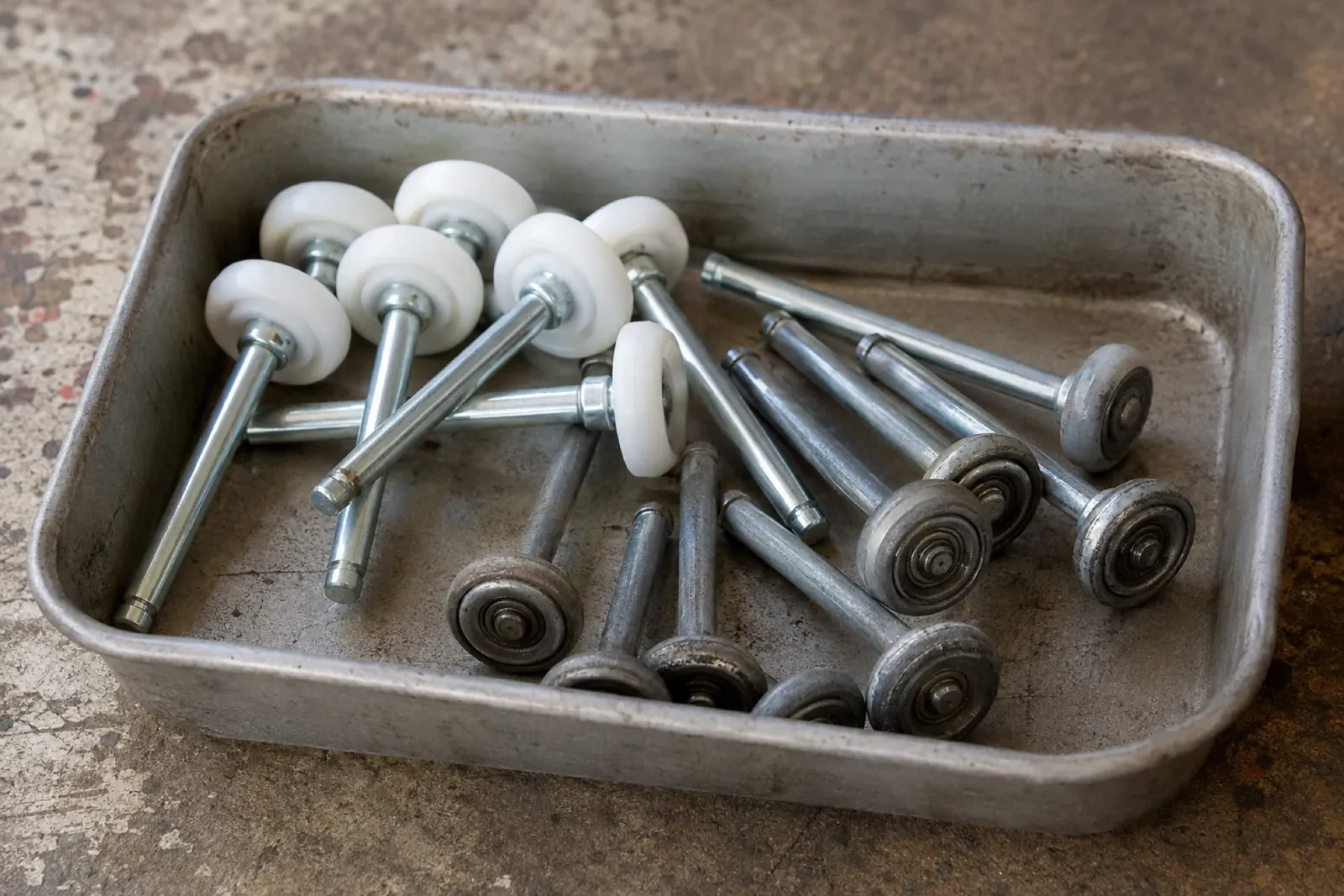
Hinges and rollers that are bent, cracked or worn are replaced with the section, and the technician checks each one on the affected joints. Sound hinges can be transferred, always by their stamped number, since each position in the door uses a different offset. Rollers that have flat spots, wobbly stems or dried bearings are swapped, often for nylon rollers that run quietly. Fasteners are always new, driven into fresh holes in the new stiles.
Related services
- Garage Door Tune-UpEvery morning the door announces itself to the whole street: a long metallic squeal as it climbs, a rattle at the top, and a groan on the way back down.
- Off-Track Garage Door ResetThe door came down fine but with a scraping noise, and now the vertical track on one side is bowed away from the wall.
- Garage Door Bottom Seal ReplacementThe garage doubles as a workshop, and with the heater running the floor near the door stays cold and the draft finds your ankles at the bench.