Springs · Oakville
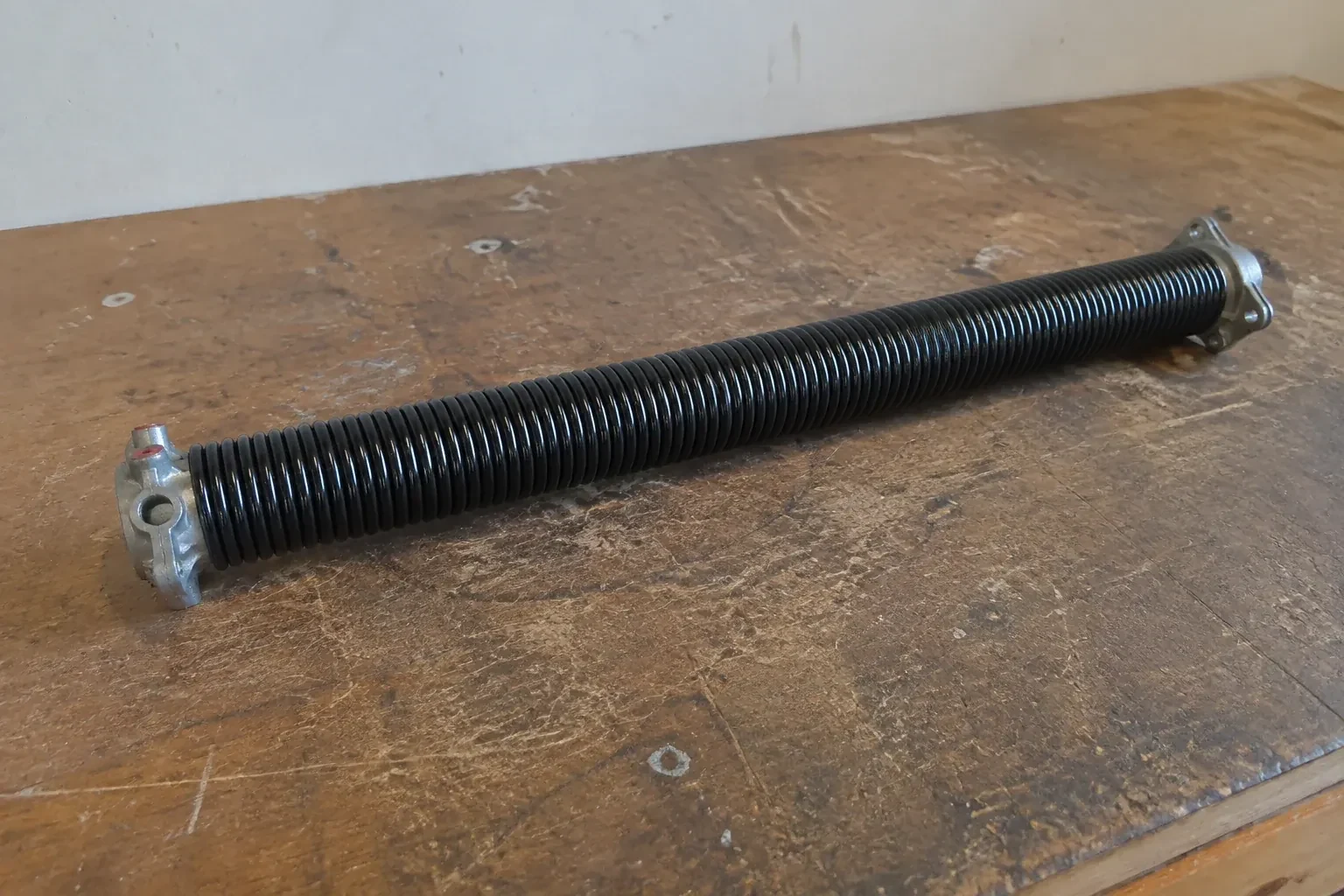
Torsion Spring Replacement
On a cold morning the remote does nothing useful: the light comes on, the motor turns briefly, the door stays shut.
In plain words
The finished result is a door that behaves the way a good garage door should: it lifts by hand with light effort, stays where you leave it at mid-height, closes softly and lets the opener run with little strain. Reaching that point involves measuring the door, choosing a matched spring, winding it to the correct turns and testing the balance through the full travel. The technician then runs the opener's reversal test and lubricates the moving parts. You are left with a record of the spring installed, so future service starts from known specifications.
How the visit goesThe door drops the last stretch to the floor rather than settling, and when you stop it halfway by hand it slides down instead of staying put. Balance has drifted, and the spring is no longer holding its share of the weight.
Torsion Spring Replacement
How the visit goes
Following the hardware the spring drives
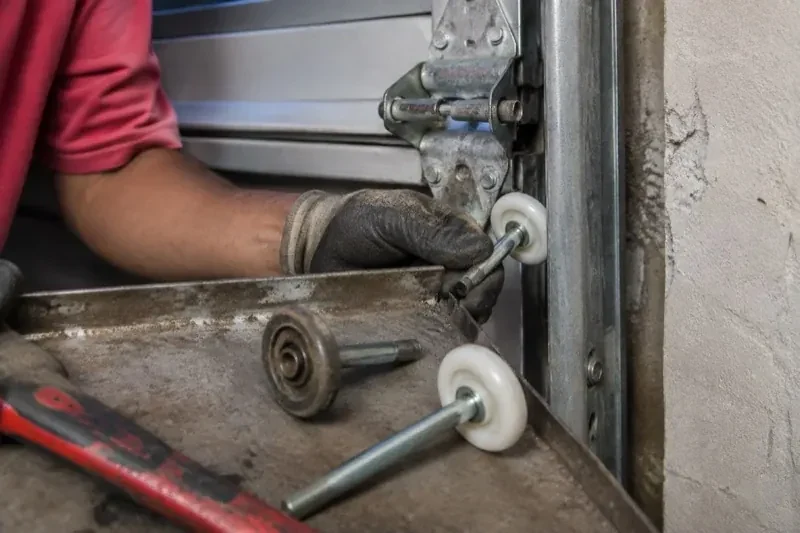
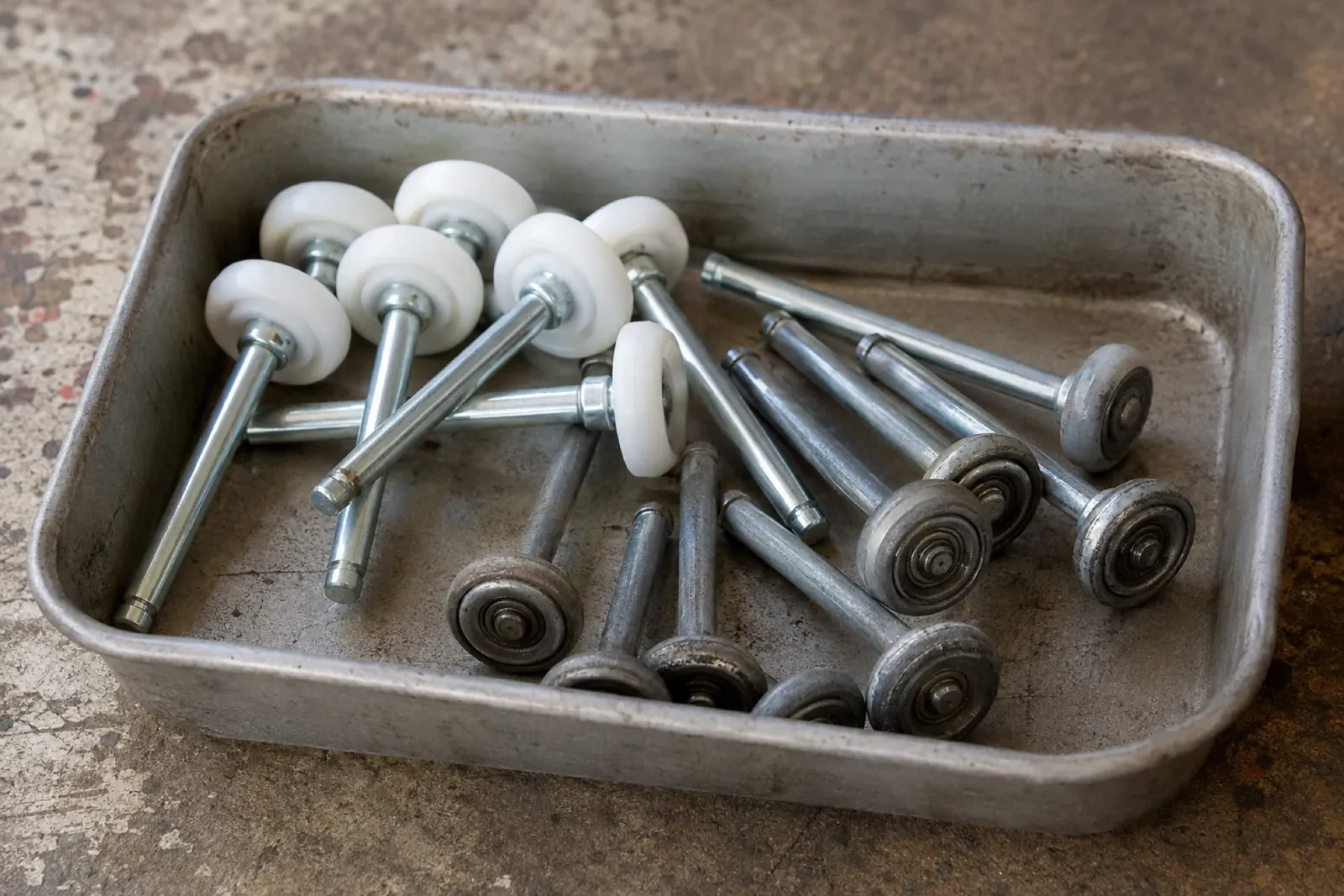
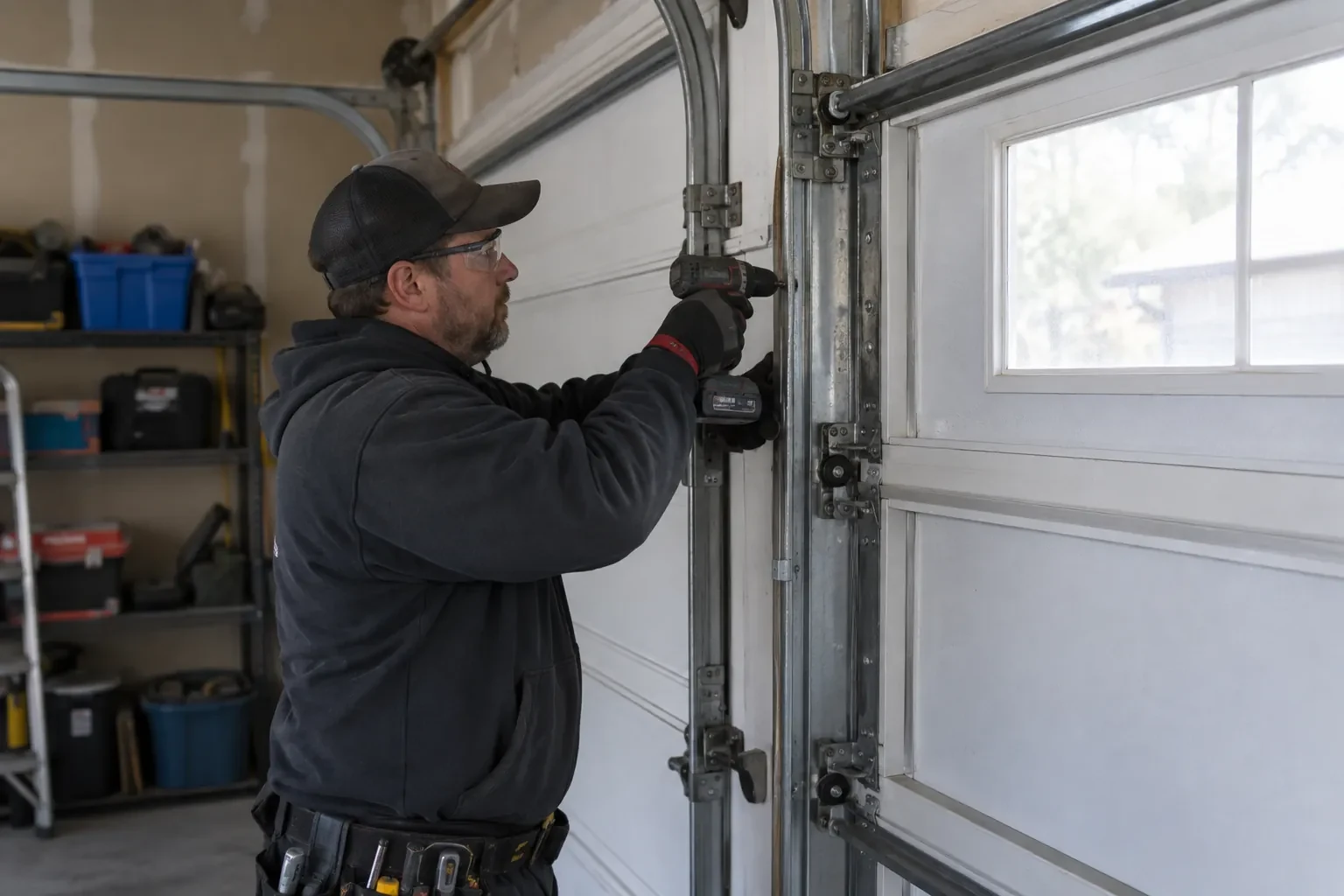
The spring is one part of a chain, so the check follows that chain from the shaft outward. The centre bearing and the end bearings are turned by hand to feel for roughness or wobble. Cable drums are inspected for cracked flanges and worn grooves, and lift cables are examined along their length and at the bottom brackets, where fraying and rust usually start. Bottom brackets and their fasteners are looked at for corrosion, and the shaft is checked for straightness. Findings here decide whether the visit is a spring swap alone or a spring plus a few tired companions.
Balancing the door by hand
Once the clamps are off, the technician lifts the door by hand to about waist height and lets go. A balanced door stays where it is, or drifts only slightly. If it rises on its own, the spring has a little too much tension and is eased a quarter turn; if it drops, a quarter turn is added. The door is then run through its full travel, watching that both sides move together and the sections stay flat in the tracks. This is repeated until the door feels light and stops cleanly at several heights, which is the standard the whole job is measured against.
A door that carries its own weight
The clearest change is in your hands: with the opener released, the door lifts with light, even effort and holds its position at mid-height instead of sliding down. That is what a balanced counterweight feels like. The door closes softly at the floor and rises without hesitation, and the opener runs with a calmer sound because it is guiding the door rather than hauling it. You can test this yourself any time by pulling the release cord with the door closed and lifting to waist height; a door that stays put is a door in balance.
Torsion Spring Replacement
In the van
Wire gauge and tape measure
End bearing plates
Lift cables
Stationary cone bolts and nuts
Socket set and wrenches
Torsion Spring Replacement
What affects the quote
Shaft condition
A bent, badly rusted or worn shaft is replaced so the drums and bearings turn true. Coupled two-piece shafts and their coupler are checked at the same time.
Access and working space
A vehicle that stays inside, shelving under the shaft, a very high ceiling or a tight side clearance affects how the technician sets up and how long the visit runs.
Centre and end bearings
With the shaft out, bearings that grind, wobble or have seized are renewed. Smooth bearings reduce the load on the spring and opener, and their condition is confirmed by hand during the check.
What to have ready
- Is the door a single or double width, and roughly how tall?
- Can you send a photo of the spring area and the opener?
- About how many times a day does the door open and close?
Torsion Spring Replacement: questions
QuestionsDo I need to be home for the visit?
It helps to have someone present to open the garage, point out anything you noticed and hear how the door should feel afterwards. The technician needs power at the opener outlet, clear space under the shaft for a ladder, and access to both sides of the door. If a vehicle is inside, it stays until the door is working. Being there also lets you approve any extra items, such as bearings or cables, as they come up.
Does the opener need adjusting after the spring is replaced?
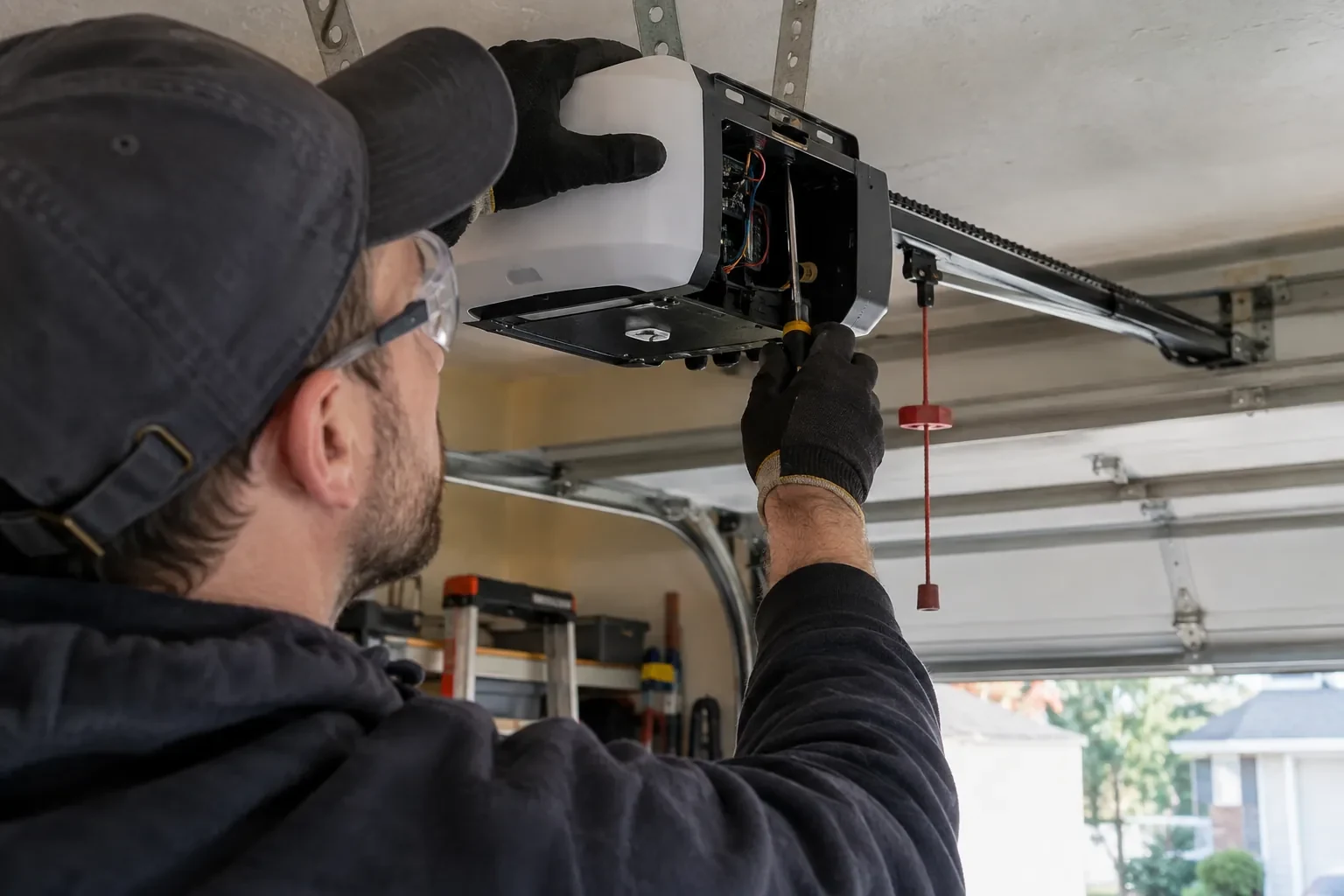
Usually a little. A balanced door presents a much lighter load than a door with a broken spring, so the opener's force settings are reset to suit it, and the travel limits are checked so the door seals at the floor and stops cleanly at the top. The technician then runs the reversal test and the photo-eye check to confirm the safety system responds correctly with the new balance.
What does a cycle rating mean?
One cycle is a full open and close. Springs are built for a set number of cycles, and a standard residential spring is commonly rated around ten thousand. A household that uses the door six times a day reaches that in roughly four to five years, while a door used twice a day stretches the same rating much further. Higher-cycle springs use heavier wire and a longer coil to produce the same force with less stress, so they last proportionally longer.
Related services
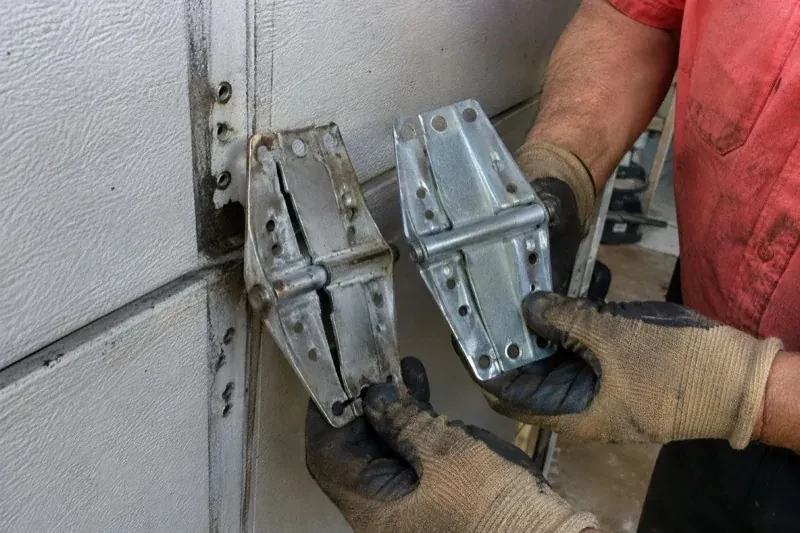
- Garage Door Hinge ReplacementThe roller at the top of the second panel is leaning outward and only half of the wheel is still in the track.
- Garage Door Track Repair or ReplacementThe door climbs crooked, one side clearly ahead of the other.
- Garage Door Cable ReplacementYour older door has springs along the tracks, and one cable has slipped off its pulley and dangles slack.