Repairs · Oakville
Garage Door Manual Lock Repair
You have just moved in.
In plain words
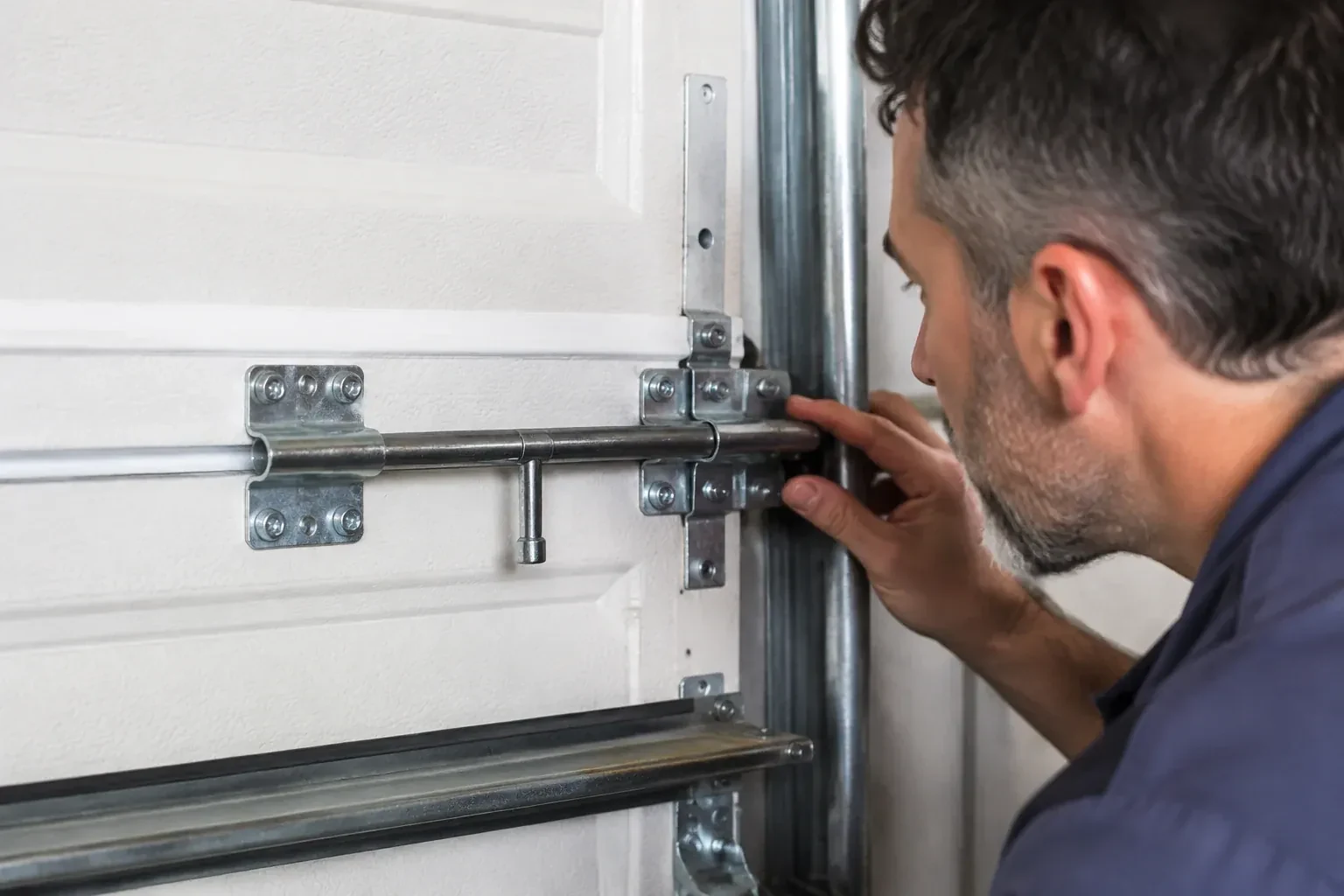
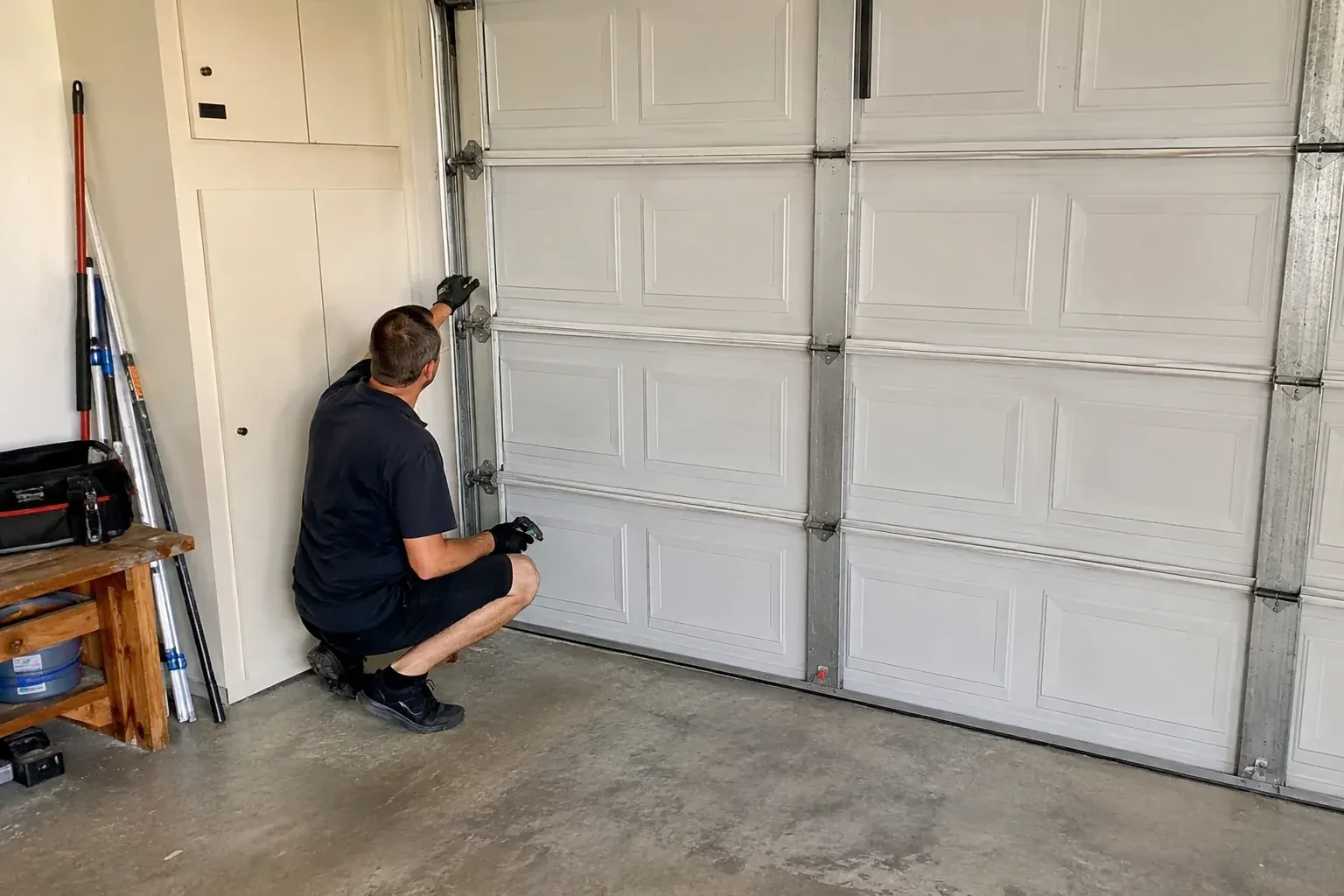
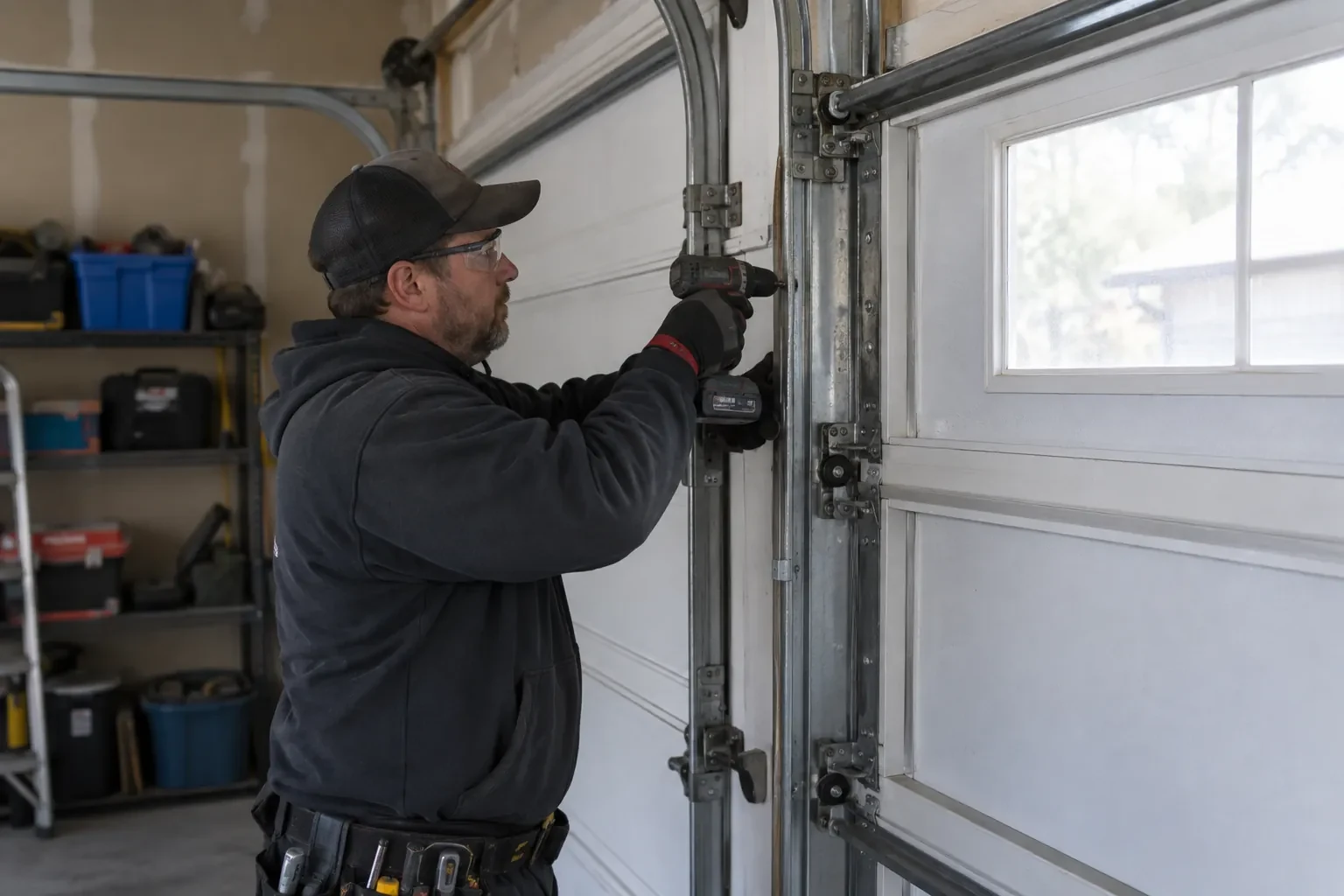
Many lock complaints turn out to be door complaints. The bar on a slide lock or a T-handle has to land in a small slot, and it only gets there if the door stops exactly where it stopped when the lock was fitted. A floor that has heaved, a track bracket that has loosened, a bottom seal that has flattened, or ice under the door all shift that landing point. The visit begins with the door: closed by hand, checked for level and for how it meets the floor and the tracks. With the door where it belongs, the lock often needs only a small adjustment to its guides.
How the visit goesThe outside handle wobbles in your hand and the inside knob spins round and round with nothing attached. The screws that held the lock through the door skin have pulled loose, leaving oval holes, and the whole thing hangs on by little more than paint.
Garage Door Manual Lock Repair
How the visit goes
Signs the opener and the lock have met
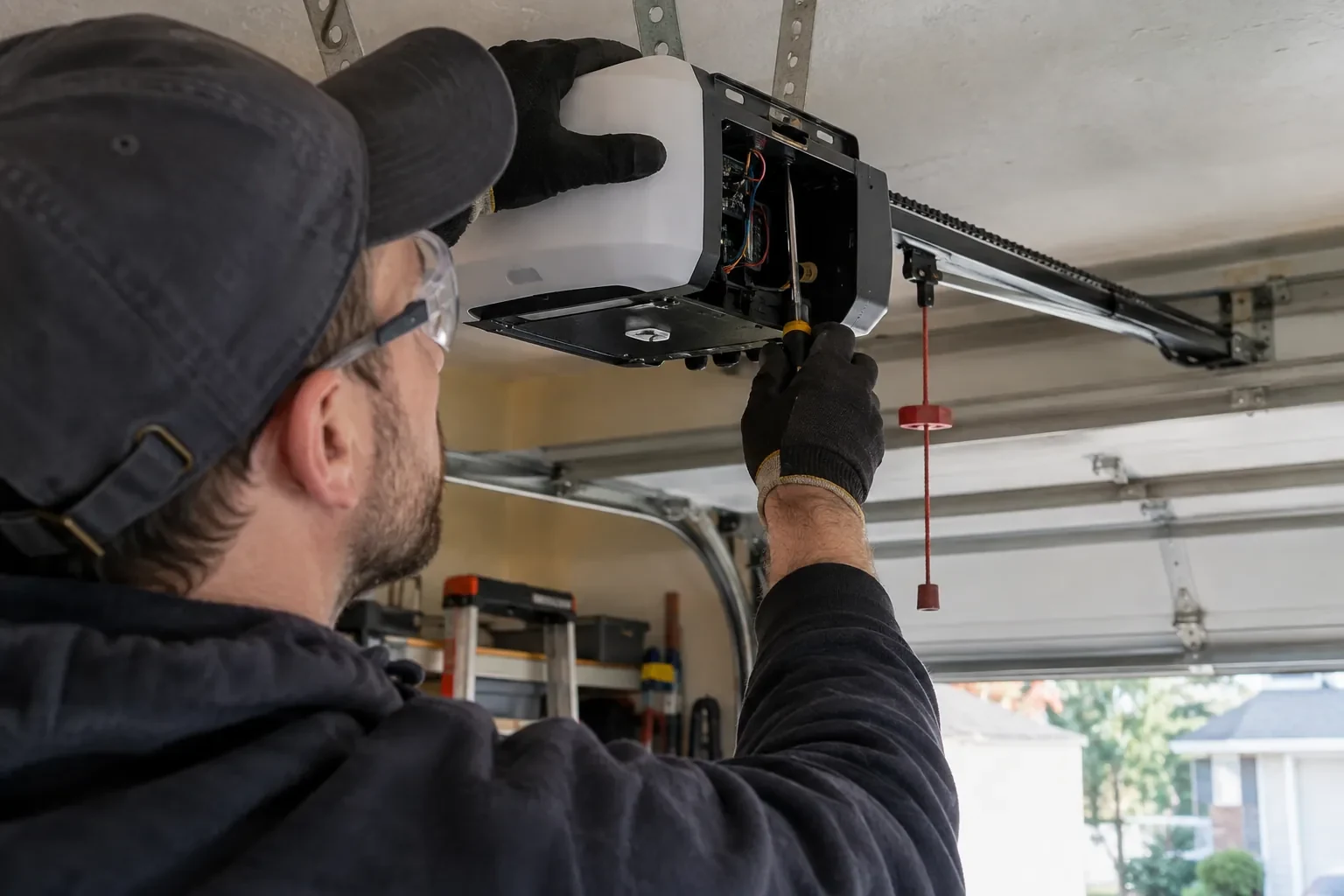
When an automatic opener shares the door, the technician looks for evidence that the two have collided: a bar bent at the track, a lock body pulled part-way from the section, a crease above the lock, a bent opener arm or a bracket strained at the top panel, and an opener that labours or reverses. The current arrangement is noted as well. Has the lock been disabled as opener makers direct, left live with no reminder, or removed altogether? Does the wall console have a lock-out feature the household knows about? These observations decide what is repaired and, just as importantly, how the door will be set up so the same thing does not happen again.
Freeing and renewing the bars and guides
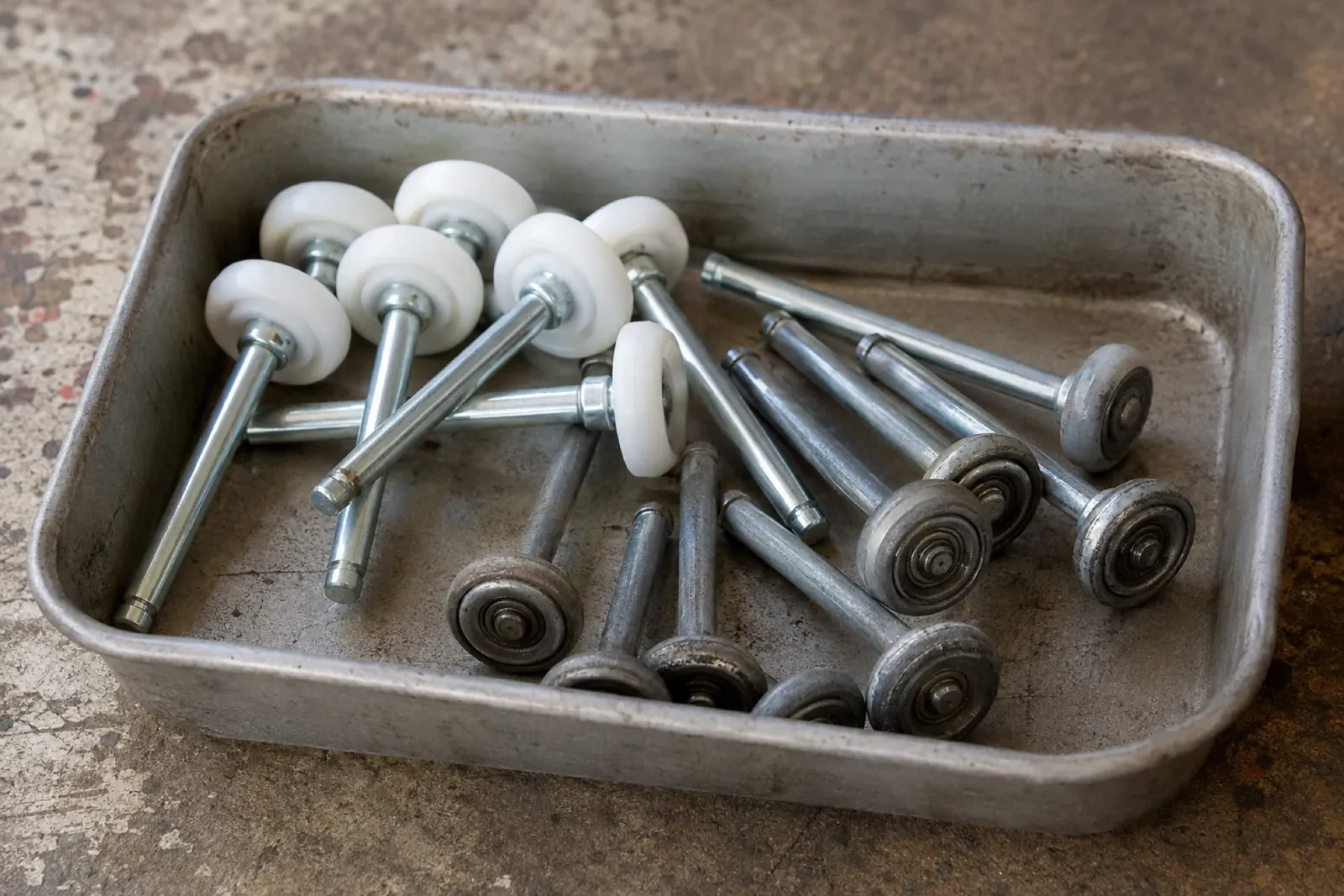
Bars that have stiffened are worked loose with penetrating oil and then cleaned back to bare metal, while guides packed with rust are removed, cleaned or replaced with new ones fixed into sound material. A bar that has kinked is replaced rather than straightened, since spring steel that has been bent once takes a set and binds forever after; the new bar is cut to suit the door's width so it reaches through the track with a comfortable margin and retracts fully clear. Both bars are set to the same throw so the door locks evenly on both sides. A light film of silicone on the bars, not grease, finishes the job.
Other ways to secure the door you now know about
The alternatives to a manual lock are worth knowing. Most wall consoles have a lock-out button that stops every remote from working while you are away, which is the everyday answer for a powered door. Some openers accept an automatic deadbolt that slides a bar into the track each time the door closes and withdraws it before the door opens, so the security of a manual lock arrives without the need to remember it. A keyed outside handle can also be connected to the opener's release for the day the power is out and you are on the wrong side of the door. None of these is required; they are simply options.
Garage Door Manual Lock Repair
In the van
Spring-steel lock bars
Keyed T-handle lock set
Lock cylinder with tailpiece
Inside slide bolt or snap latch
Inside turn handle and spindle
Garage Door Manual Lock Repair
What affects the quote
Adjust, repair or replace
A guide reset or a cylinder rekey is a small job; a new mechanism or a complete handle set with bars is a larger one. The inspection settles which is needed before anything is quoted.
Adding a lock where none existed
Fitting a new slide bolt or a keyed handle to a door that never had one includes punching track slots, a section cutout for a handle and running bars to both tracks.
Corrosion and seized hardware
Screws rusted solid, a cylinder seized in its handle or bars welded into their guides take time to free or cut out, and corroded parts are replaced rather than reused.
What to have ready
- Is the lock a sliding bar inside, a T-shaped handle outside with a key, or both?
- Do you have a key for the lock, and how many keys would you like?
- Does the handle turn, and does anything move inside the door when it does?
Garage Door Manual Lock Repair: questions
QuestionsHow do I lock the garage door during a power outage?
With the door closed, pull the opener's release cord so the trolley lets go of the door, then throw the slide bolt or turn the T-handle to lock. When power returns, unlock first, check both bars are clear of the track, and then re-engage the opener as its manual describes, usually by running it once. Keeping to that order is what protects the lock and the opener.
Should the manual lock be removed when an opener is installed?
Opener makers ask for it to be disabled or removed, and the door industry's guidance agrees. Disabled can mean the bars are fixed back or taken out while the handle stays for appearance, or a snap latch is held open on its catch. Keeping a lock live for outages calls for a manufacturer-approved interlock, not a label alone, since a reminder and routine are not treated as a substitute for removing or disabling the bars.
Can I keep using the opener while the lock is jammed?
Only if you are certain the bars are fully clear of the track. If the lock is stuck in the locked position, or you are not sure, leave the opener alone and use another door until the technician arrives. A motor pulling against an engaged bar bends the bar and strains the door section and the opener, and the repair grows accordingly.
Related services
- Garage Door Tune-UpEvery morning the door announces itself to the whole street: a long metallic squeal as it climbs, a rattle at the top, and a groan on the way back down.
- Off-Track Garage Door ResetThe door came down fine but with a scraping noise, and now the vertical track on one side is bowed away from the wall.
- Garage Door Panel ReplacementYears of slap shots have peppered the lower two sections with dents.