Springs · Oakville
Garage Door Hinge Replacement
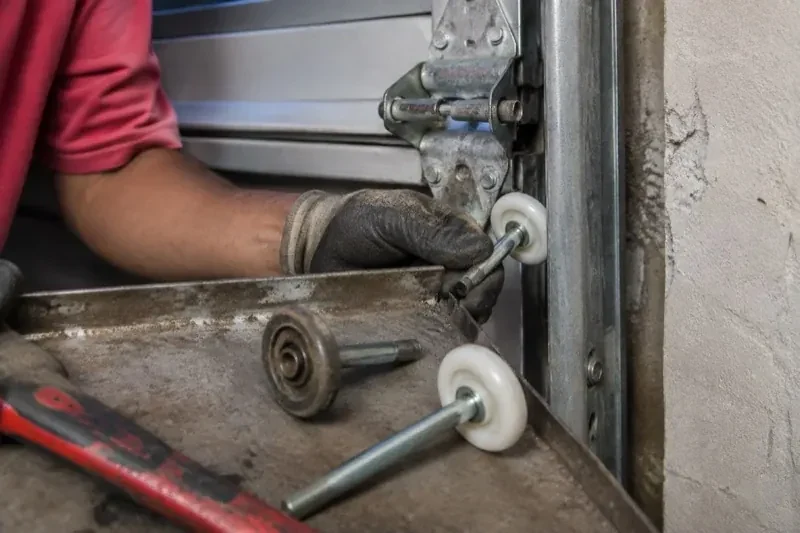
The roller at the top of the second panel is leaning outward and only half of the wheel is still in the track.
In plain words
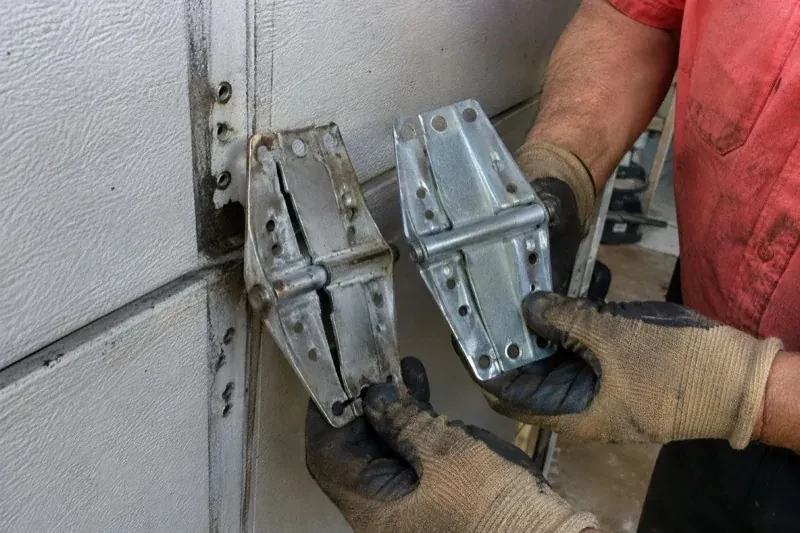
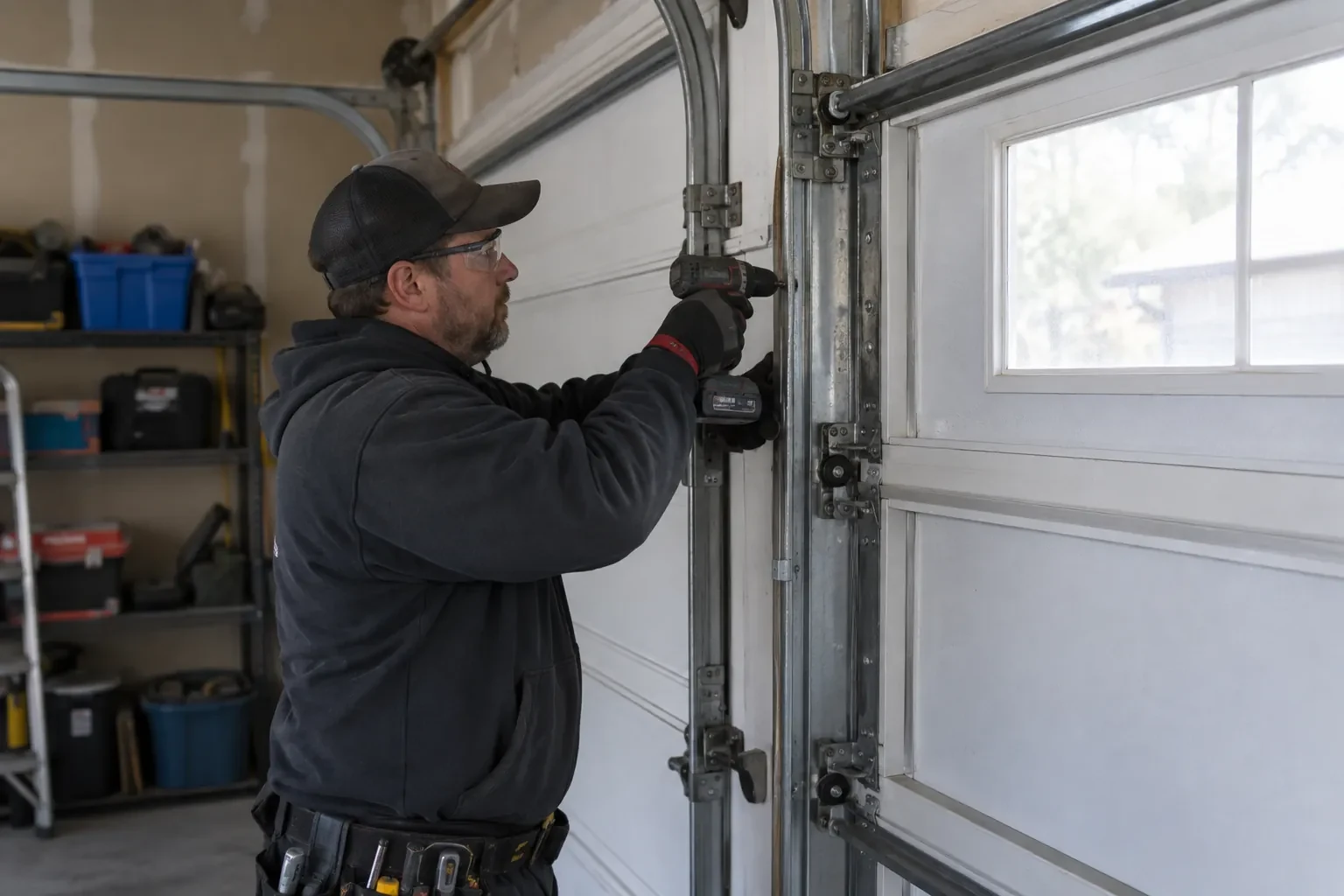
The hinge is only as good as what it is screwed to. On a steel door the screws bite into the stile, a folded steel channel at the panel edge, sometimes with a support plate behind it; on a wood door they thread into timber. Years of vibration back screws out, and once a hole is stripped the hinge rocks and the joint loosens. Hinge replacement includes fresh fasteners, and where holes have opened up the technician shifts to sound metal, steps up to a larger self-drilling screw, or bolts through the panel with a nut and washer or a backer plate. The new hinge then stays put.
How the visit goesWatching from inside as the door opens, you can see the gap between the second and third panels open up on one side as they turn the corner into the ceiling, then close again. The other side stays tight.
Garage Door Hinge Replacement
How the visit goes
Reading the number on each edge hinge
Every edge hinge carries a stamped number, and the technician reads it rather than assuming. A 1 sits at the joint above the bottom panel, a 2 at the next joint up, then 3, with 4 and 5 appearing on taller doors. The number sets how far the roller stands off the door, so the door leans into the jambs when closed and follows the track as it climbs. An earlier repair sometimes leaves a 2 where a 3 belongs, and that door binds or gaps at the curve for years without anyone knowing why. Confirming the number on each joint, and correcting any that are wrong, is part of the first look.
One hinge at a time, door closed
Hinges are changed singly, never a whole joint at once. With the door closed and the opener disconnected, the technician removes one worn hinge, fits its replacement and tightens it before moving to the next, so at every moment the joint is held by its other hinges and the panels stay aligned. Centre hinges go first when several are due, then the edge hinges. Each new hinge is set square to the joint line and snug to both panels before the screws are driven home, and the panels are checked for a flush face afterwards. This steady rhythm is what makes hinge work routine rather than eventful.
Keeping salt off the low hinges
The two lowest joints live in the wettest part of the garage. Through winter, push slush away from the inside of the door rather than letting it sit against the bottom panels, and when a mild day comes wipe the road salt off the lower hinges, brackets and rollers with a damp cloth followed by a dry one. A light mist of silicone on the low knuckles in late autumn helps meltwater run off. Clear the ridge of ice that forms at the threshold before running the door, so the opener is never pulling against a panel frozen to the slab. These habits protect exactly the hinges that fail first here.
Garage Door Hinge Replacement
In the van
Socket set and impact driver
Flashlight and level
Hex-head self-drilling screws
Heavy-gauge hinges for heavy doors
Panel strut
Garage Door Hinge Replacement
What affects the quote
A full hardware tune-up while the technician is there
Some people use the visit to have every hinge screw snugged, all rollers checked and the whole door lubricated. That service is optional and quoted as one line.
Opener adjustment afterwards
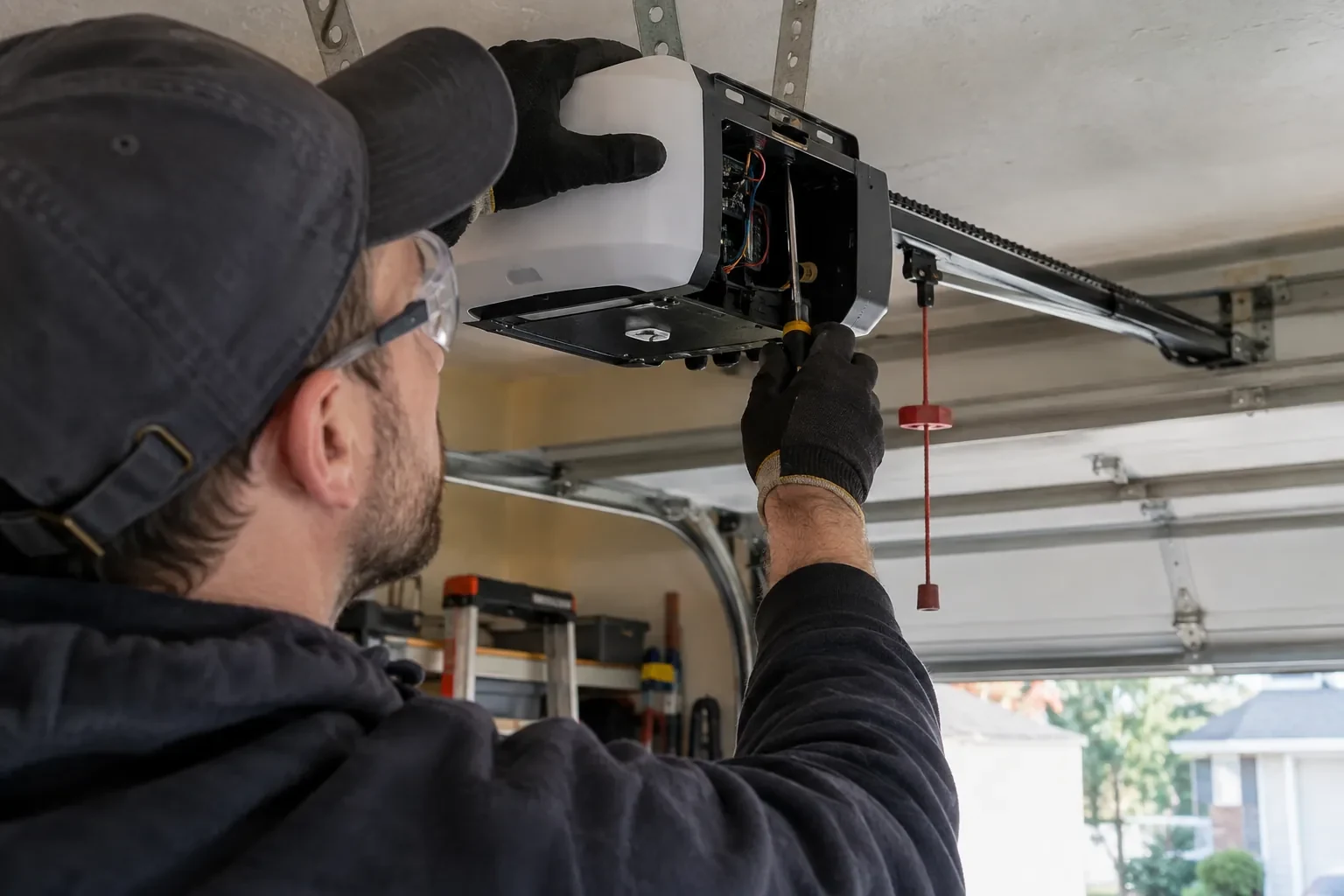
A door that folds freely again sometimes needs the opener's force and travel settings reset and its reversal retested. That adjustment is named when it is needed.
How many hinges are changed
One cracked centre hinge is the smallest job. Several worn hinges across two or three joints, which is common on an older door, means more parts and more time, and the quote lists each.
What to have ready
- Do any screws turn without tightening when you press a hinge?
- Has a car, bin or anything else bumped the door recently?
- Is the door a single or a double, and how many panels does it have?
Garage Door Hinge Replacement: questions
QuestionsThe screws spin in their holes. Can the hinge still be fitted securely?
Yes. A stripped hole is common on older steel doors and on wood doors where the timber has softened. The technician either shifts the hinge to fresh metal within the stile, uses a larger self-drilling screw that cuts new threads, or drills through and fits a bolt with a nut and washer or a backer plate on the inside. Any of these gives the new hinge a firmer anchor than the original screws had.
What information helps when I book the visit?
Whether the door is closed, open or stuck; where the noise or the gap appears and roughly how high; whether you can see a cracked, bent or loose hinge and whether it is at the edge or the middle; whether the door is a single or a double, steel or wood, and how many panels it has; and whether anything hit the door lately. A photo of the hinge and its stamped number is useful.
What happens during a hinge replacement visit?
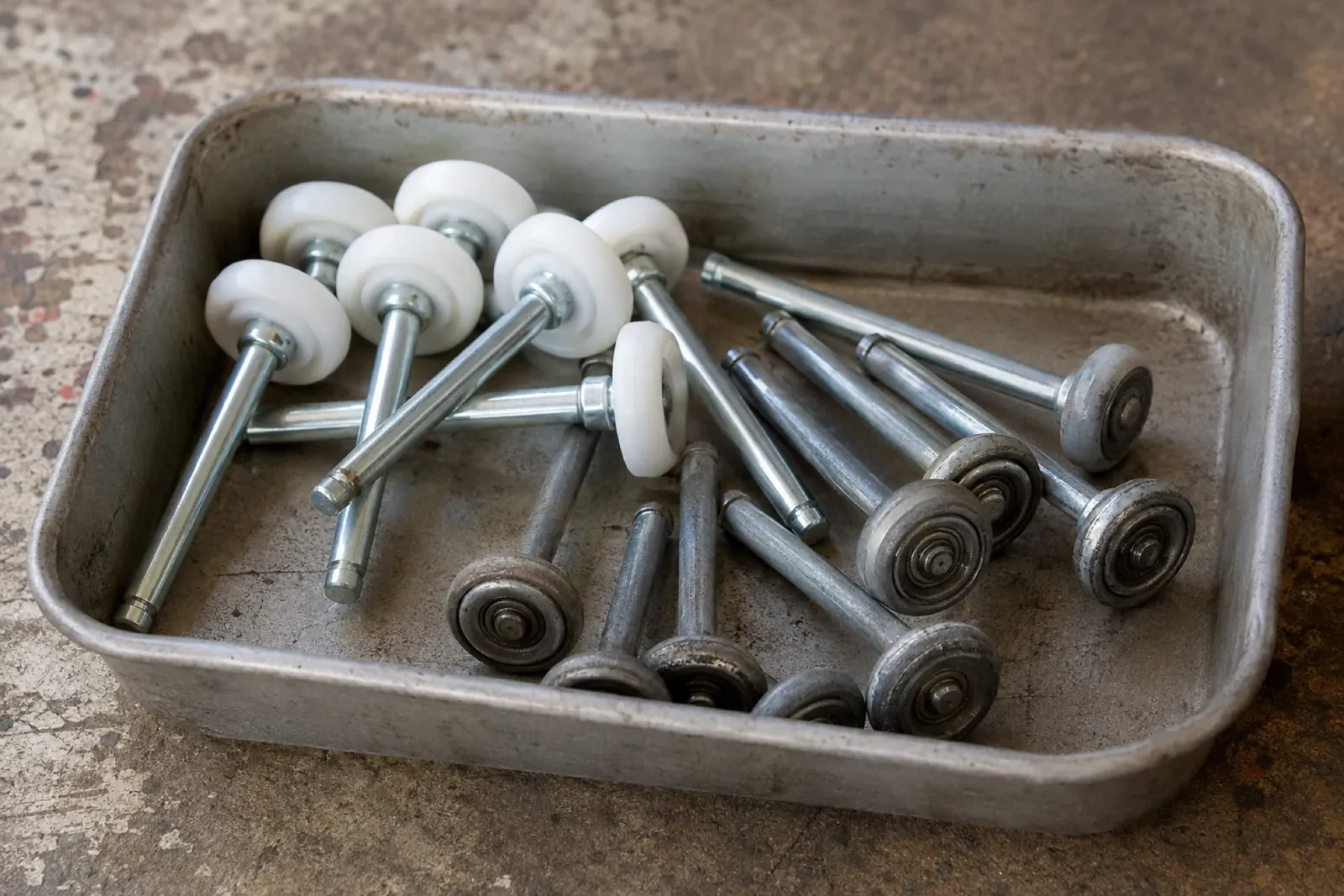
The opener is disconnected and the door left closed. The technician inspects every hinge, roller and screw hole and explains what was found. Worn hinges are then changed one at a time with parts of the same number and gauge, tired holes are re-anchored, and rollers are renewed where needed. The door is run by hand to check the panels fold cleanly and the fit against the jambs, balance is tested, and the opener is reconnected and its safety reversal tested.
Related services
- Garage Door Track Repair or ReplacementThe door climbs crooked, one side clearly ahead of the other.
- Garage Door Cable ReplacementYour older door has springs along the tracks, and one cable has slipped off its pulley and dangles slack.
- Torsion Spring ReplacementOn a cold morning the remote does nothing useful: the light comes on, the motor turns briefly, the door stays shut.