Repairs · Oakville
Garage Door Tune-Up
Every morning the door announces itself to the whole street: a long metallic squeal as it climbs, a rattle at the top, and a groan on the way back down.
In plain words
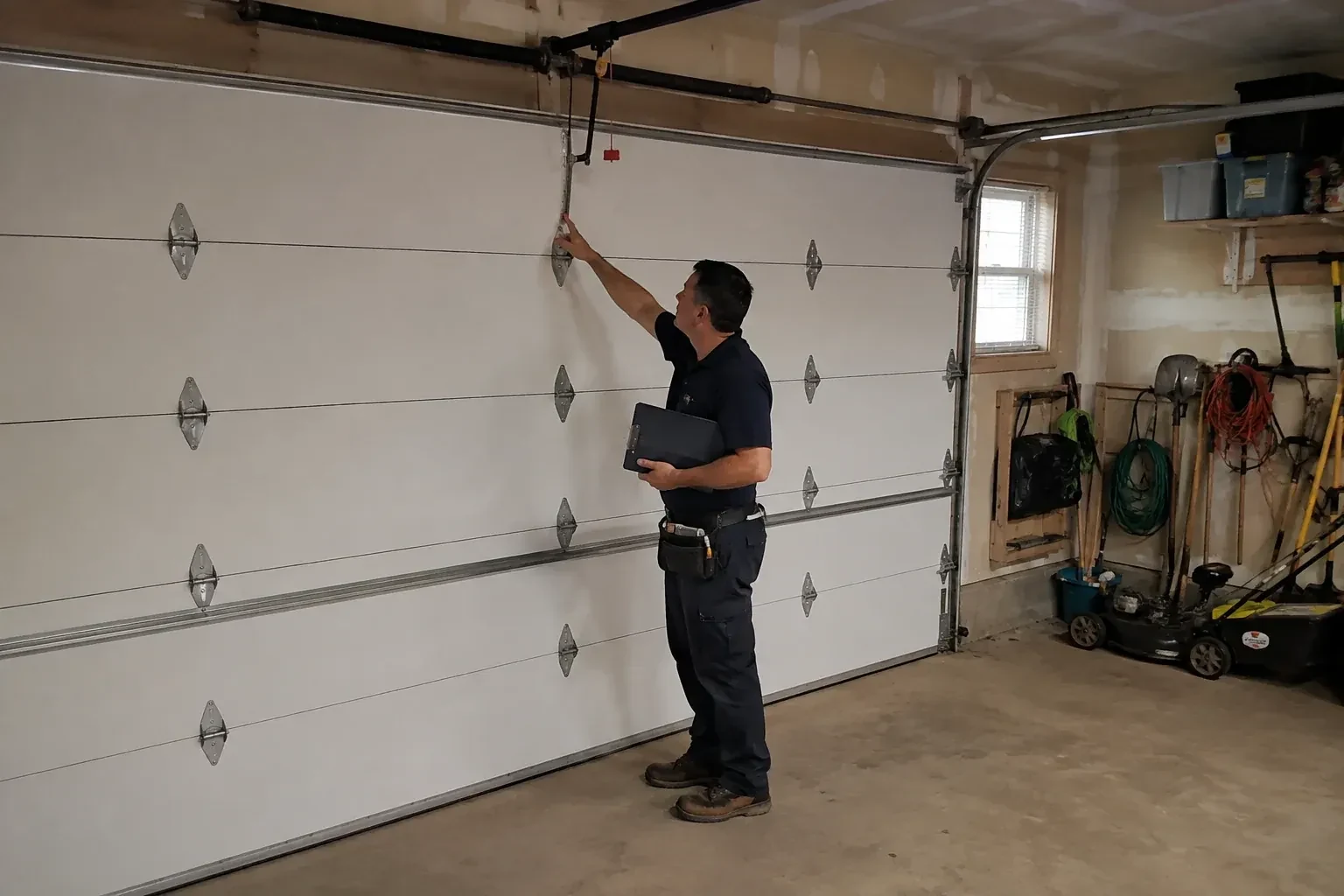
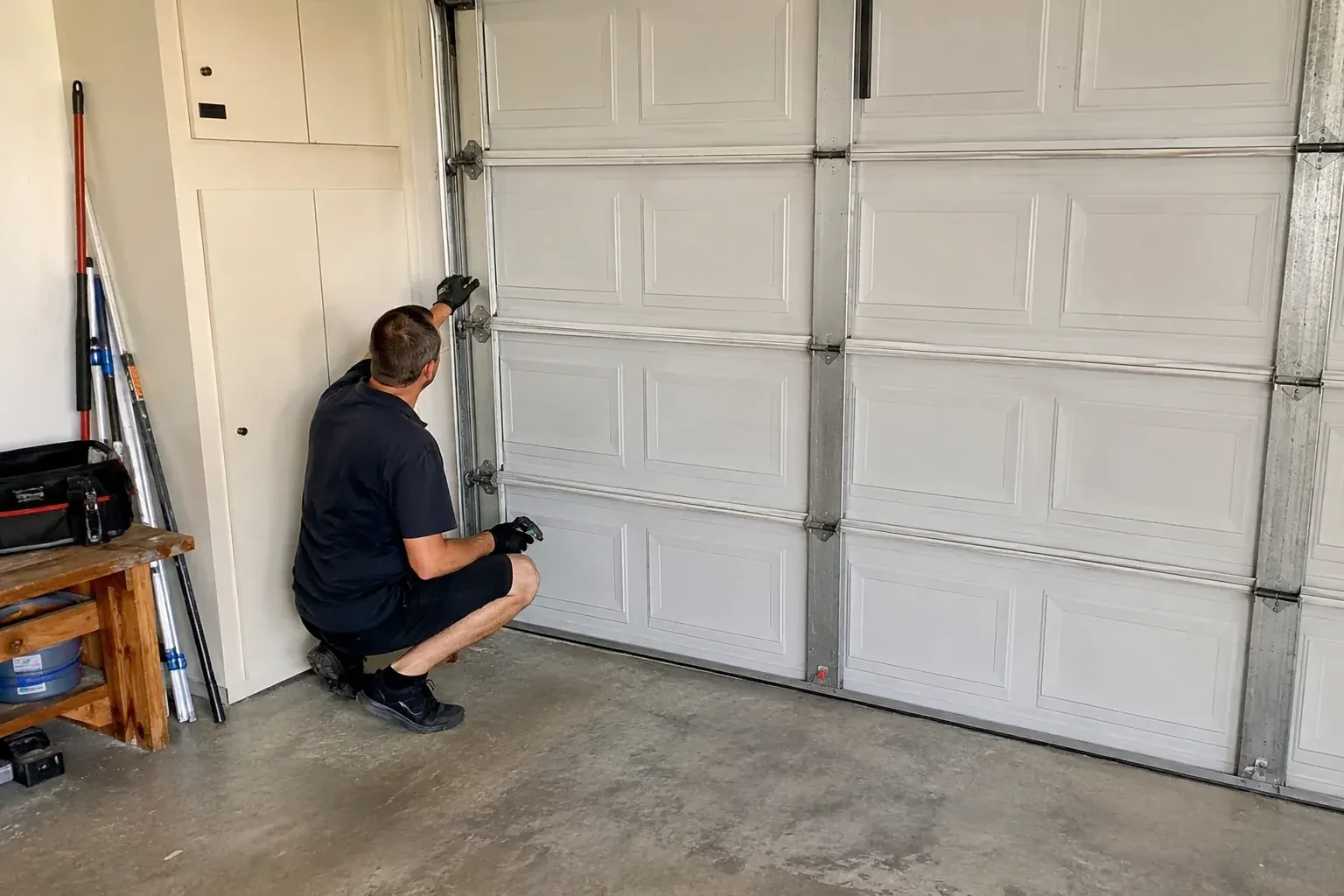
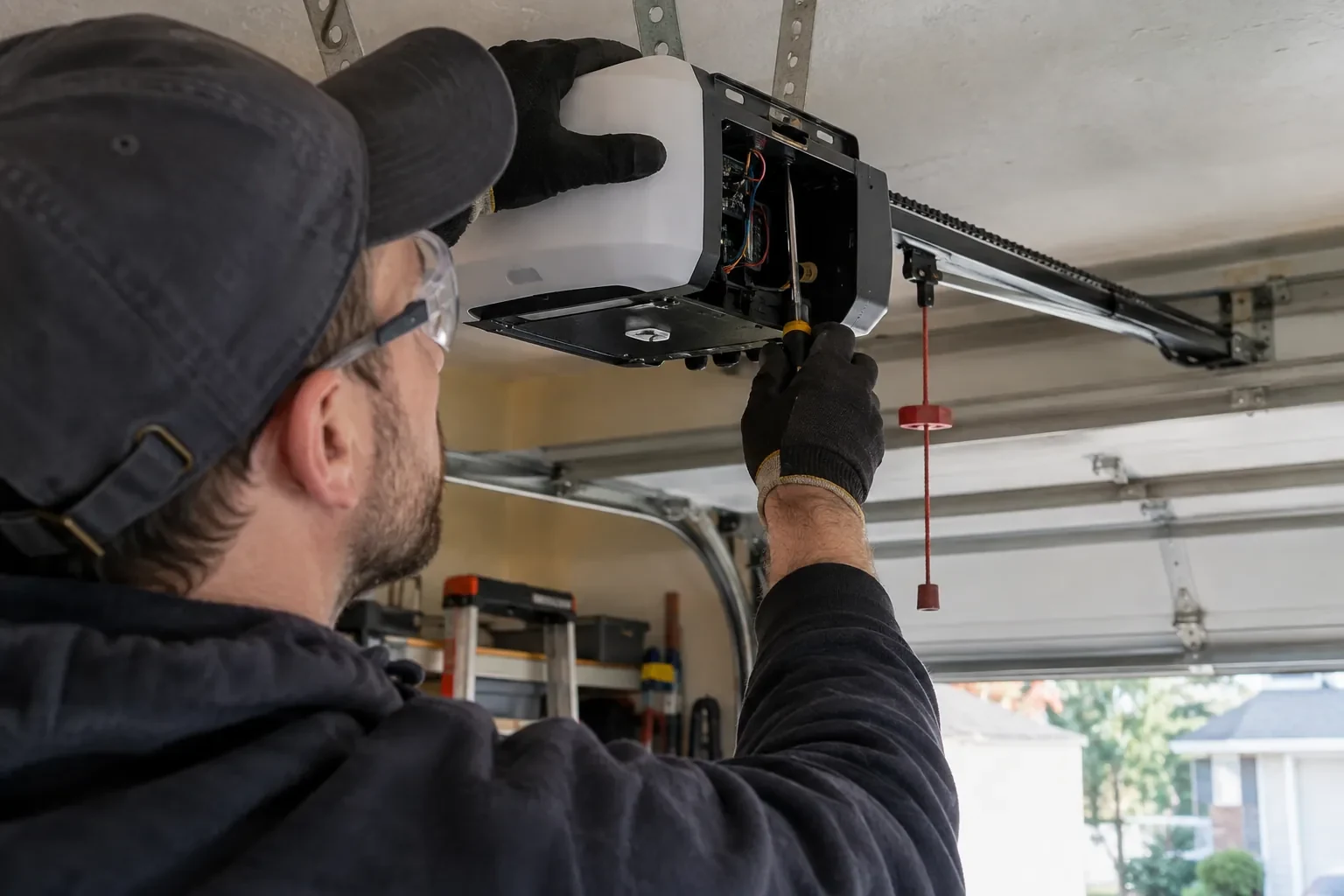
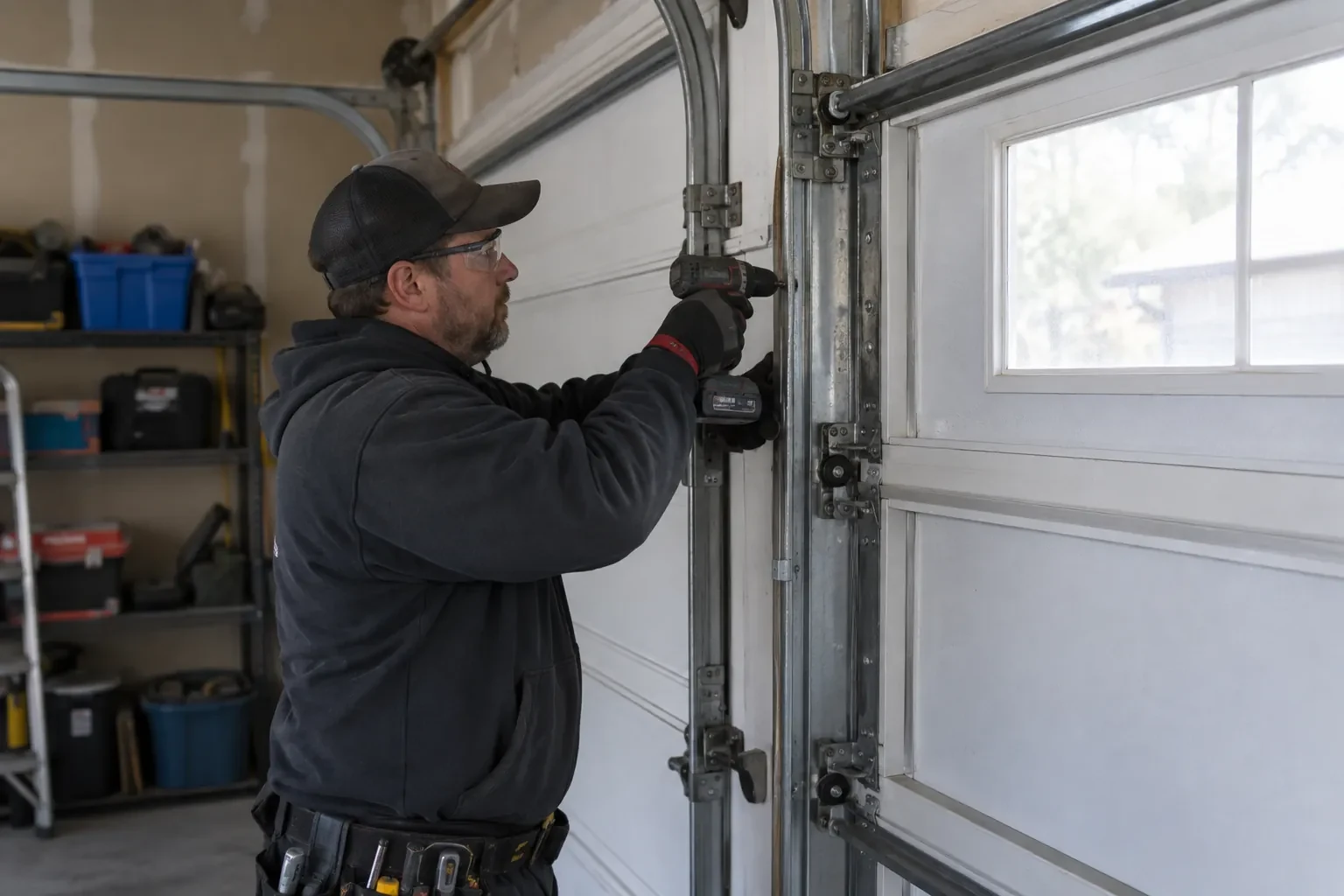
The visit follows a set order. First the technician watches a full cycle, up and down, from a safe distance, noting where the noise, shaking or hesitation lives. Then the door is closed and inspected hardware by hardware, from the bottom brackets to the torsion shaft. The manual release is pulled and the door is lifted by hand to feel the balance. Only then does the work start: fasteners, lubrication, opener adjustments and sensor alignment. A second cycle and the reversal tests close the visit, and the difference between the first run and the last is the measure of the tune-up.
How the visit goesYou moved in a few months ago and have no idea when the garage door was last looked at. The previous owners left the remotes on the counter and no paperwork, and the door works, but it works loudly and unevenly.
Garage Door Tune-Up
How the visit goes
Rollers in their track
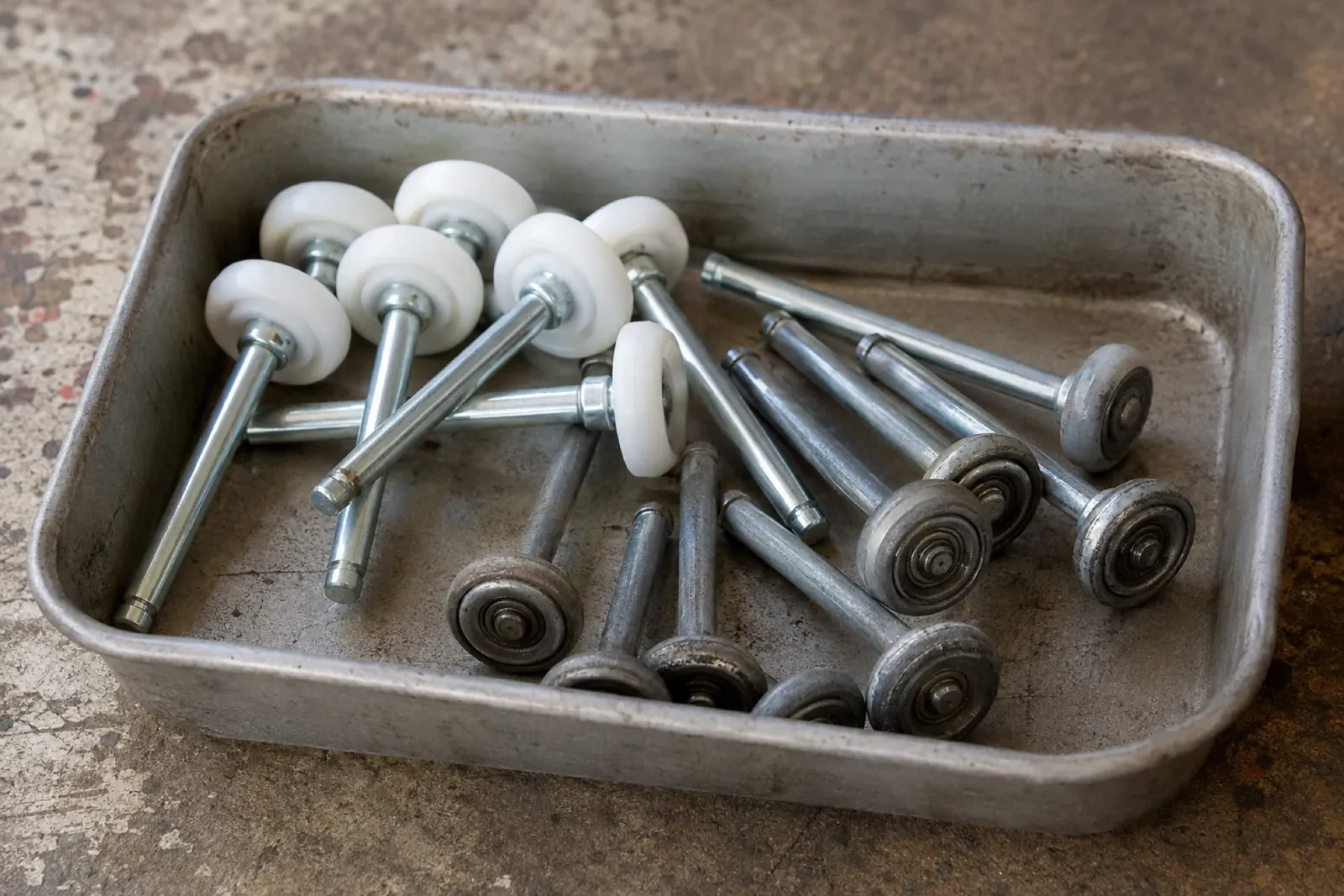
Rollers and track are read together. The technician looks at the wear pattern on the rollers, checks whether steel rollers have gone out of round and whether nylon ones are chipped, and confirms that each roller sits fully in the track with its stem seated in the hinge. The vertical tracks are checked for plumb and for the small gap that should exist between the roller and the track wall, since a track that has been pulled tight against the door makes the rollers drag. The curved and horizontal sections are inspected for dents, loose hangers and the grit that accumulates at the bend. A clean, straight track with rolling rollers is what a smooth door is made of.
Tightening what the door shook loose
A garage door moves hundreds of kilograms of steel through a curve twice a day, and the vibration works on every screw. The technician goes back along the list made during inspection and tightens hinge screws, track bolts, bracket lags and the fasteners at the opener header and rail. Stripped screws are replaced with the next size, and missing ones are filled. Track brackets are snugged with the roller-to-track gap preserved so nothing binds. The bottom brackets and anything anchored to the springs are deliberately left alone, since they hold the door's weight under tension; if one of those is loose it becomes a separate job with the tension safely released first.
Ready for the cold months
After a fall tune-up the door is set up for the season that tests it hardest. The lubricant on the moving parts stays fluid in the cold rather than thickening into a drag on the opener. The bottom seal and jamb weatherstrip have been treated so they stay flexible below freezing and release from the slab instead of tearing. If the seal ever freezes down on a bad morning, free the ice and dry the area before running the door rather than letting the opener force it; that habit protects the top section better than any force setting. You have been shown the threshold spot where water pools, and clearing snow and ice there becomes part of shovelling the driveway.
Garage Door Tune-Up
In the van
Bottom seal (astragal)
Hinge screws and track bolts
2x4 test block and tape measure
Socket set and drivers
Replacement hinges
Garage Door Tune-Up
What affects the quote
Height and access
A tall door with the opener and springs high on the header, or a garage packed with storage along the tracks, adds ladder work and time compared with a clear standard-height bay.
Age of the door and opener
Older hardware may need fasteners in sizes no longer standard, and an opener without photo-eyes prompts a conversation about entrapment protection that is quoted separately from the tune-up.
Door construction and weight
A heavy wood or insulated steel door works its hardware harder than a light aluminum one, and the balance check and fastener work take a little longer on the heavier door.
What to have ready
- Are the springs mounted above the door or along the sides beside the tracks?
- What brand is the opener, and is it a chain, belt, screw or wall-mounted unit?
- Where in the door's travel does the problem happen?
Garage Door Tune-Up: questions
QuestionsWill the tune-up include replacing worn parts?
Small wear items found on the day, such as a roller or a hinge on a middle section, a bottom seal or a few fasteners, can often be replaced during the visit if you agree and the part is on the truck. Larger items, including springs, cables, drums, bottom brackets, a bent track or an opener gear, are written up as separate repairs with their own quote so you can decide with the facts in hand rather than under a raised ladder.
Which lubricant is right for a garage door?
A silicone-based or white lithium garage door lubricant, sold for the purpose. Penetrating oils and general sprays are thin, attract dust and are gone in weeks; heavy grease traps grit. For the rubber bottom seal and weatherstrip, use only a silicone spray, since petroleum products attack rubber and make it brittle. Nylon rollers with sealed bearings need no lubricant, while ones with an exposed bearing can need a touch where their own maker calls for it. A small amount on each point, worked in by moving the door, is enough.
What should I do if the bottom seal freezes to the floor?
Do not keep pressing the button; the opener can tear the seal or pull the top section out of shape. Free the seal by clearing the ice along the threshold, with warm water poured on the concrete rather than the door, or by working a plastic scraper along the seal. Then treat the seal with a silicone spray. Keeping snow and meltwater cleared from the threshold and keeping the seal flexible with silicone prevents most repeats.
Related services
- Off-Track Garage Door ResetThe door came down fine but with a scraping noise, and now the vertical track on one side is bowed away from the wall.
- Garage Door Panel ReplacementYears of slap shots have peppered the lower two sections with dents.
- Garage Door Bottom Seal ReplacementThe garage doubles as a workshop, and with the heater running the floor near the door stays cold and the draft finds your ankles at the bench.